
Cold Plunge for Beginners: How to Start Safely, What to Expect and Common Mistakes

Starting a cold plunge for beginners can feel intimidating. Cold water immersion is one of the most physiologically intense wellness practices, especially the first few times. The goal for beginners is not toughness or endurance—it is safe exposure, gradual adaptation, and understanding what your body is doing.
This guide explains how to start safely, what sensations are normal, how adaptation unfolds over time, and which beginner mistakes to avoid. The focus is conservative, science-aligned, and practical—so you can approach cold plunging with clarity rather than hype.
What Cold Plunge Therapy Is (and Is Not)
Cold plunge therapy refers to brief, controlled exposure to cold water—typically between 40–60°F (4–15°C)—for physiological adaptation and recovery support. The defining feature is water immersion, which creates a rapid skin and nerve response unlike cold showers.
Cold plunging is not about forcing relaxation, chasing adrenaline, or “hacking” emotions. The primary effects are mechanical and neurological, including vasoconstriction, altered breathing reflexes, and nervous system activation.
From a physiological standpoint, cold plunge therapy is best understood as a stressor that the body adapts to over time. The cold itself is not inherently beneficial; rather, the controlled exposure prompts short-term responses that, when repeated conservatively, can improve tolerance to physical stress.
It is also important to distinguish cold plunge therapy from endurance cold exposure. Extended exposure, uncontrolled environments, or competitive behavior shift the activity from therapeutic stress into risk. For beginners, cold plunging should always be time-limited, intentional, and recoverable.
A useful beginner framework is to think in three layers: stimulus (temperature + immersion depth), dose (time + frequency), and recovery (how you warm up and return to baseline). When any one layer becomes too aggressive—such as very cold water with long duration—the experience can become more stressful than intended.
Cold plunge therapy also differs from “cold exposure” in general because water transfers heat away from the body far more efficiently than air. This is one reason immersion tends to feel more intense than a cold room or cool outdoor walk, even at similar temperatures.
If you are deciding whether cold plunging is appropriate for your goals, start by clarifying what “success” means for you. For beginners, success is usually: (1) a manageable first minute, (2) a steady breathing pattern by the end of the session, and (3) a return to comfort afterward without lingering distress.
For readers building a broader foundation, our Blog Index organizes all cold plunge education topics in one place, including safety, routines, and timing considerations.
For a foundational overview, see our guide to what cold plunge therapy is and how it differs from casual cold exposure.
What Beginners Typically Experience During Their First Plunge

Most beginners experience a rapid, involuntary response in the first 10–30 seconds. This includes sharp skin sensation, fast breathing, and an urge to exit the water. These responses are expected and temporary.
- Rapid breathing or gasping (cold shock response)
- Elevated heart rate
- Tingling or burning sensation on the skin
- Strong mental resistance
These sensations occur because cold receptors in the skin send immediate signals to the brainstem, triggering protective reflexes. The body interprets sudden cold exposure as a potential threat, even when the environment is controlled.
Importantly, the intensity of the initial response does not predict long-term tolerance. Many individuals who struggle during their first exposure adapt noticeably within a small number of sessions, provided the temperature and duration are appropriate.
Beginners often find the experience changes in phases. The first phase is the “entry shock,” where breathing feels the most difficult. The second phase is stabilization, when breathing becomes more rhythmic and the urge to exit decreases. The third phase is the decision point: you either exit because your planned time is complete, or you exit because breathing control is slipping.
It can also help to know what is commonly normal versus what should prompt a conservative exit. Normal can include strong discomfort, rapid breathing early, and skin redness after you get out. Conservative exit signals include a loss of breathing control that you cannot regain within a few breaths, feeling lightheaded, or feeling unusually panicked.
If you are unsure whether a response is “normal for beginners,” it can be useful to keep sessions short and consistent rather than pushing duration. Your early goal is repeatable exposure, not maximizing minutes.
These reactions are neurological, not dangerous in healthy individuals. According to the Cleveland Clinic, controlled breathing and gradual entry reduce the intensity of the cold shock response.
For readers who want to explore the research landscape directly, PubMed’s database includes a broad range of studies on cold water immersion and related physiology. A starting point is: PubMed results for “cold water immersion”.
Why Breathing Control Is More Important Than Endurance
Breathing is the primary lever beginners can control. Slow nasal breathing helps blunt sympathetic overactivation and stabilizes heart rate during immersion.
Rather than forcing stillness, beginners should focus on:
- Long exhales
- Relaxed shoulders and jaw
- Staying mentally present
From a nervous system perspective, breathing acts as a feedback mechanism. Rapid, shallow breathing reinforces stress signals, while slow, controlled breathing sends cues of safety back to the brain.
This is why willpower alone is an unreliable strategy. Attempting to “power through” discomfort often increases tension, elevates heart rate, and shortens tolerance. Breathing regulation, by contrast, directly influences physiological responses.
A practical beginner approach is to treat the first 20–40 seconds as a breathing drill rather than a “test.” If you can lengthen your exhale and reduce shoulder tension, the rest of the session often becomes more manageable.
Many beginners also benefit from a conservative entry method. Instead of jumping in quickly, you can enter slowly to waist level, pause to regain breathing control, then lower in further. The goal is to avoid stacking stressors—rapid entry plus very cold water plus long duration.
If you notice your breath becoming shallow or erratic, a simple reset is to prioritize a longer exhale for several cycles. In practical terms, this can look like breathing in normally, then extending the exhale and relaxing the face and hands. The objective is not perfect technique; it is restoring control.
Research indexed in PubMed shows that controlled breathing moderates autonomic stress responses during cold exposure, reducing perceived intensity.
For additional background on cold exposure and safety considerations, Mayo Clinic’s health education resources provide conservative guidance. A helpful starting point is: Mayo Clinic.
Beginner-Safe Cold Plunge Temperatures

Beginners do not need extreme temperatures. Starting colder than necessary increases discomfort without increasing benefits.
- Recommended start: 55–60°F (13–15°C)
- Progression range: 50–54°F (10–12°C)
- Advanced range: Below 45°F (7°C) after adaptation
Temperature selection should prioritize repeatability. A temperature that allows consistent practice is more valuable than one that forces premature exits or skipped sessions.
Lower temperatures increase the speed and intensity of the cold shock response, which may overwhelm beginners before breathing control develops. Gradual reductions allow both physical and psychological adaptation.
Beginners also benefit from measuring water temperature rather than guessing. Even a few degrees can noticeably change how intense the first minute feels. If you are using a home tub, a basic thermometer can help keep sessions consistent from week to week.
If your setup uses ice, the water temperature may vary significantly depending on the amount of ice, starting water temperature, and how long the tub sits. For beginners, consistency is often more important than “as cold as possible,” especially during early adaptation.
For a deeper breakdown, see our cold plunge temperature guide.
How Long Beginners Should Stay in the Cold
Duration matters more than intensity for beginners. Short exposures allow adaptation without overwhelming the nervous system.
- 30–60 seconds for the first sessions
- 1–2 minutes after the first week
- 2–3 minutes once breathing control improves
Time in cold water should always be viewed as flexible rather than fixed. Exiting early due to loss of breathing control is preferable to extending duration at the expense of safety.
Longer exposures do not necessarily produce greater benefits and may increase cardiovascular strain, particularly in unadapted individuals.
Another practical guideline is to keep the “difficulty curve” modest. If you cannot regain steady breathing within the first 20–40 seconds, either shorten the session, raise the temperature, or adjust your entry method. This keeps the practice sustainable and reduces the chance of aversion.
Some beginners feel lingering chill after exiting the water. A conservative approach is to rewarm gradually: towel dry, put on warm clothing, and allow your body to return to comfort over time rather than forcing rapid heat exposure. The goal is calm recovery, not bouncing between extremes.
If you want a dedicated reference on structuring time in the tub, see our cold plunge duration guide.
Mayo Clinic guidance emphasizes gradual exposure to avoid excessive cardiovascular strain.
How Often to Cold Plunge as a Beginner

More is not better at the start. Frequency should allow recovery between sessions.
- 2–3 times per week initially
- Daily plunging only after adaptation
Spacing sessions allows the nervous system to recalibrate and reduces cumulative stress. Early daily exposure can blunt adaptation and increase fatigue.
Beginners often benefit from treating cold plunging as a skill practiced intermittently rather than a daily obligation.
A conservative progression model is to keep frequency steady for the first two weeks (for example, three sessions per week), then adjust only one variable at a time. If you increase frequency, keep temperature and duration stable. If you lower temperature, keep frequency stable. This avoids stacking intensity and helps you identify what actually changed.
If you notice your baseline energy or sleep quality decreasing after adding sessions, that is useful information. For beginners, a small reduction in frequency can restore balance while still allowing adaptation.
See our full cold plunge frequency guide for progression strategies.
Common Cold Plunge Mistakes Beginners Make
Most problems arise from rushing the process. Common mistakes include:
- Starting too cold
- Staying in too long
- Holding breath instead of regulating it
- Using cold plunge as punishment or stress release
Avoiding these errors improves safety and consistency.
Who Should Not Start Cold Plunging Without Medical Clearance

Cold plunge is not appropriate for everyone. Individuals with cardiovascular disease, uncontrolled hypertension, or cold hypersensitivity should consult a medical professional first.
Cold exposure places acute demands on the cardiovascular and autonomic systems. For individuals with underlying conditions, these demands may exceed safe thresholds.
Even in healthy individuals, illness, dehydration, or extreme fatigue may temporarily increase risk. Skipping sessions during these periods is a conservative and appropriate choice.
Beginners should also treat supervision and environment as part of safety. If you are plunging at home, avoid locking doors, avoid environments where you could slip after exiting, and consider having another person nearby during early sessions. These practical choices reduce risk without changing the practice itself.
If you have questions about how to approach cold plunging conservatively based on general safety considerations, you can reach us through our Contact page.
For detailed contraindications, review our cold plunge risks and safety guide.
How the Body Adapts Over Time
Adaptation typically occurs over 1–3 weeks. Sensations soften, breathing stabilizes faster, and perceived stress decreases.
NIH-reviewed research suggests repeated cold exposure improves autonomic flexibility rather than eliminating stress responses entirely.
Cold Plunge vs Cold Showers for Beginners
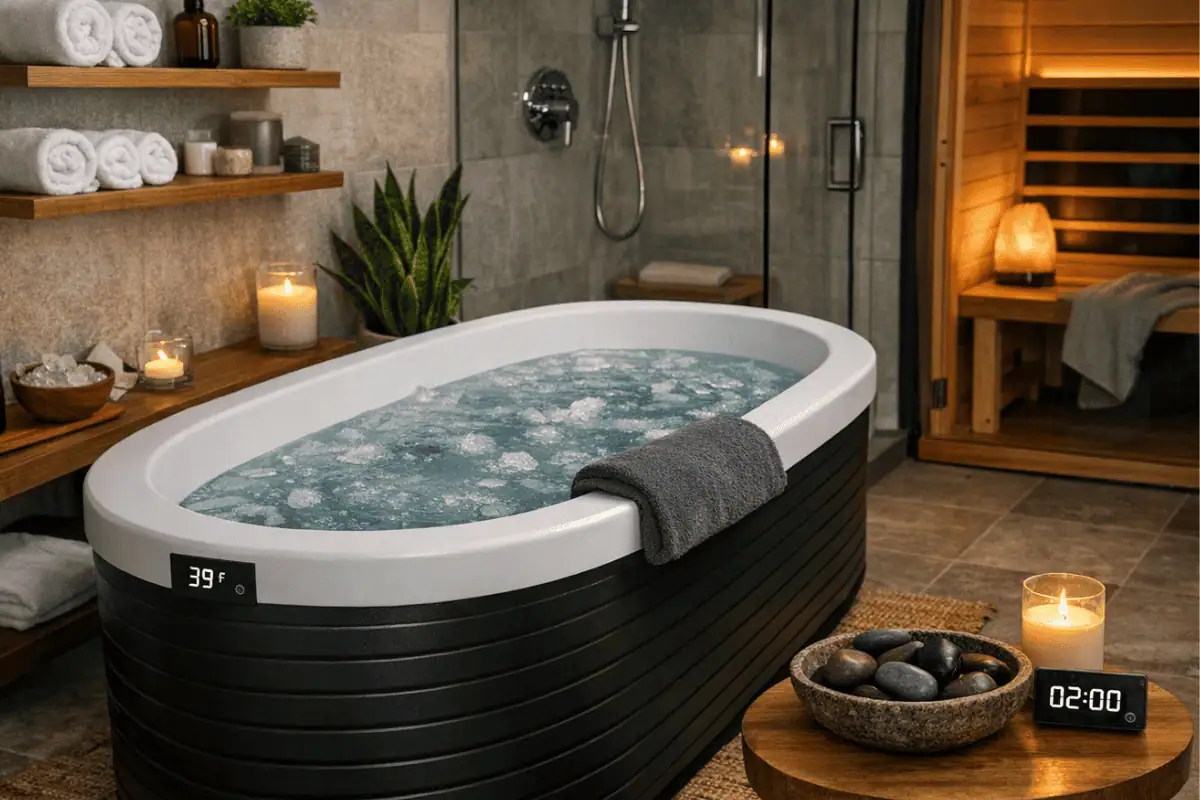
Cold showers provide partial exposure but lack the full hydrostatic pressure and uniform cooling of immersion.
For comparison, see cold plunge vs ice bath.
What to Do After You’re Comfortable with Cold Plunging
Once basics are mastered, beginners can explore structured routines, contrast therapy, or recovery-focused timing.
Our cold plunge benefits page outlines evidence-backed applications.
Starting Cold Plunge the Right Way
Cold plunge for beginners works best when approached with patience and respect for physiology. Short sessions, moderate temperatures, and consistent breathing form the foundation of safe adaptation.
If you’re considering equipment options, our Best Cold Plunge Tubs Buyer’s Guide explains systems designed for controlled, beginner-friendly use.
