
Cold Plunge vs Sauna: Benefits, Risks, Recovery Effects, and Which Is Better for Your Goals

The debate around cold plunge vs sauna often frames these therapies as opposites—cold versus heat, shock versus relaxation. In reality, both modalities influence circulation, the nervous system, and recovery in distinct ways, and the “better” choice depends on your goals, timing, and health profile.
This guide compares cold plunge therapy and sauna use through a conservative, science-aligned lens—examining mechanisms, benefits, risks, and practical decision-making. The aim is not to crown a universal winner, but to help you choose intelligently and safely.
Quick Navigation
Looking for equipment options and buying guidance? See the Buyer’s Guide →
What Is Cold Plunge Therapy?

Cold plunge therapy involves brief immersion in cold water—typically ranging from cool to very cold—to stimulate physiological stress responses. It is often discussed within the broader category of cold water immersion.
During exposure, the body responds with rapid vasoconstriction (narrowing of blood vessels), heightened alertness, and changes in breathing and heart rate. Over time, repeated exposure may lead to adaptation, with users reporting improved tolerance and recovery awareness.
One practical way to think about cold plunge therapy is as a short, controlled dose of cold stress. The “dose” includes the water temperature, the immersion duration, and how quickly you rewarm afterward. Small changes in any of these factors can meaningfully change the experience and the physiological load.
Many beginners notice that the most intense part is the first 15–45 seconds, when breathing reflexes and skin discomfort are strongest. That initial phase is often described as “cold shock.” A conservative approach is to keep early sessions brief and prioritize controlled breathing over chasing colder temperatures.
Cold plunge sessions are also discussed in different contexts:
- Recovery-focused use (often after training)
- Routine-based use (morning alertness and consistency)
- Stress resilience practice (tolerance and composure under discomfort)
The goal is not to maximize suffering. The goal is to apply a safe, repeatable stimulus that fits your health profile and schedule.
For a foundational overview, see What Is Cold Plunge Therapy?.
What Is Sauna Therapy?

Sauna therapy exposes the body to elevated heat—traditionally through dry or steam environments—causing passive warming. Core temperature rises gradually, prompting sweating and vasodilation (widening of blood vessels).
Sauna use is commonly associated with relaxation, cardiovascular conditioning effects, and heat acclimation. Unlike cold plunge, the stressor is thermal load rather than cold shock, and the subjective experience is typically calming rather than stimulating.
A helpful way to view sauna sessions is as passive heat exposure where the body regulates temperature primarily through circulation changes and sweating. Because heat stress builds more gradually than cold shock, people often tolerate longer sessions, but the risk of dehydration and overheating increases if sessions become too long or too hot.
Sauna “types” are often discussed in everyday conversation (dry sauna, steam room), but many of the practical differences come down to:
- Heat intensity (how hot the air feels and how quickly you warm)
- Humidity (how easily sweat evaporates)
- Session length and cooldown habits
Because the experience tends to be more relaxing, sauna is often used later in the day. That said, if the session is extremely hot or very long, some people feel overstimulated afterward rather than calm—especially if hydration and cooldown are not managed well.
While both modalities affect circulation, the direction and timing of those effects differ significantly.
Circulation and Cardiovascular Effects

Cold plunge causes rapid vasoconstriction at the skin, redirecting blood toward the core. Upon exit and rewarming, vasodilation occurs, increasing peripheral blood flow.
Sauna therapy produces sustained vasodilation during exposure, increasing heart rate and skin blood flow in a manner sometimes compared to moderate cardiovascular exercise.
A simple decision point in the cold plunge vs sauna conversation is whether you want an acute constriction-then-rebound pattern (cold) or a steady dilation pattern (heat). Both can feel “circulation-enhancing,” but they get there through different routes and can feel very different in the moment.
Cold immersion can feel intense because vasoconstriction happens quickly, and breathing reflexes can temporarily elevate perceived cardiovascular strain. Sauna can feel easier at first, but heart rate can climb meaningfully during heat exposure, especially with longer sessions.
- Cold plunge: Acute constriction → rebound dilation
- Sauna: Gradual, sustained dilation
Another practical layer is the role of blood pressure variability. Cold exposure can cause abrupt changes in vascular tone, while heat can lower vascular resistance during exposure. If someone has known cardiovascular disease, arrhythmia history, or blood pressure instability, it is generally safer to seek medical guidance before using either modality aggressively.
According to the Mayo Clinic’s overview of sauna use, heat exposure can raise heart rate and circulation without active movement.
Nervous System Response and Stress Load

Cold plunge creates an immediate sympathetic nervous system response—often perceived as alertness or intensity—followed by parasympathetic rebound after exposure.
Sauna use tends to promote parasympathetic dominance during and after sessions, aligning with relaxation and downregulation.
One of the most useful ways to compare these modalities is by asking: How does this change my state right now? Cold exposure is more likely to increase arousal during the session. Heat exposure is more likely to feel calming during the session, even though it still represents meaningful physiological stress.
Because the nervous system response is central to the experience, “dose control” matters. For cold plunge, dose control often means shorter exposure, a less extreme temperature, and a focus on breathing control. For sauna, dose control often means moderate session length, hydration, and a cooldown period.
Research summarized in PubMed studies on thermal stress suggests that both cold and heat act as hormetic stressors, but the timing and magnitude of stress differ.
Recovery, Inflammation, and Muscle Soreness

Cold plunge is commonly discussed for post-exercise recovery, particularly for managing perceived soreness. Cooling may temporarily reduce local inflammation signaling and pain perception.
Sauna therapy supports recovery differently—by increasing circulation and promoting muscle relaxation. Heat may improve tissue elasticity and subjective comfort.
A conservative way to apply this in real life is to match the modality to the training goal and the time window:
- If the priority is comfort and perceived soreness reduction, cold immersion is often discussed as helpful.
- If the priority is relaxation, mobility comfort, and post-session unwinding, heat may be a better fit.
It is also important to separate “recovery” into components. Recovery can mean soreness perception, range of motion, sleep quality, training readiness, or mood. Cold and heat may support different parts of that recovery picture rather than the exact same outcome.
The NIH’s review on cold water immersion notes mixed findings, emphasizing context, timing, and individual response.
Sleep, Relaxation, and Mental State
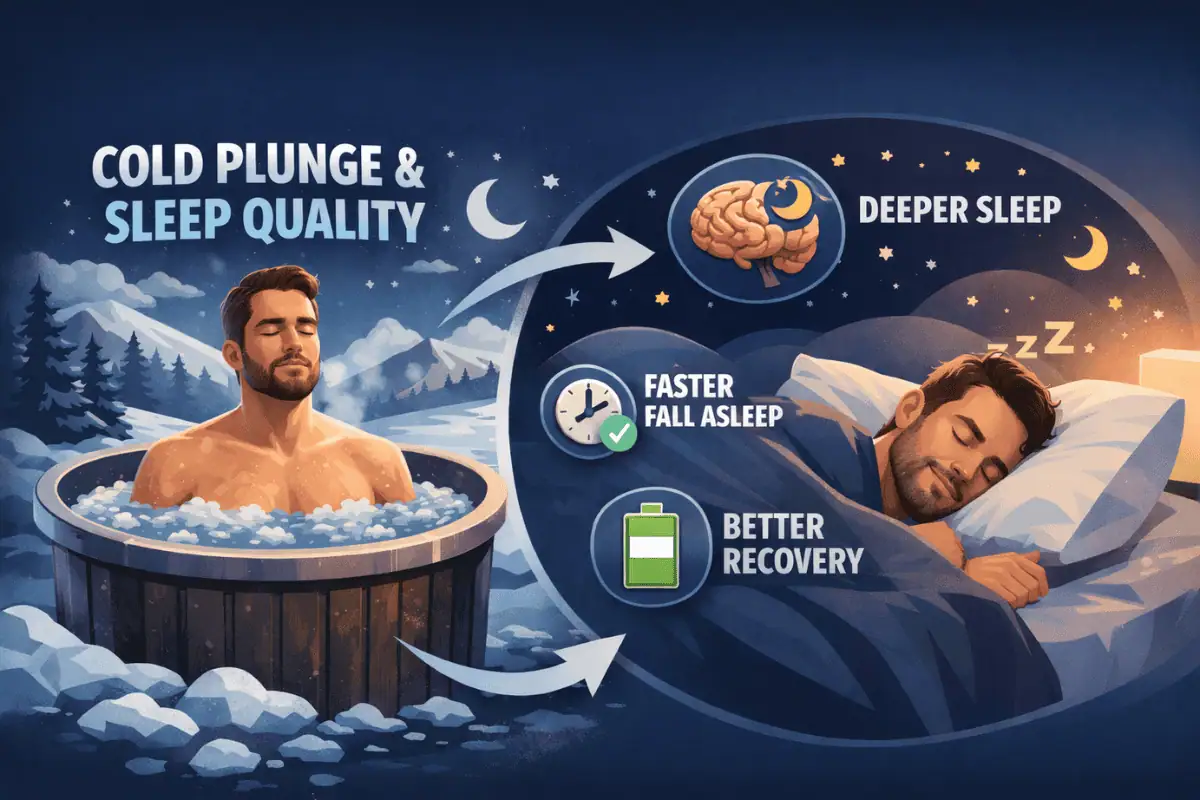
Sauna sessions are often associated with improved relaxation before sleep when timed appropriately. The gradual cooling after heat exposure may support sleep onset for some individuals.
Cold plunge effects on sleep are more timing-dependent. Morning or early-day exposure is generally discussed as stimulating, while late-night cold immersion may be disruptive for some.
A simple practical framework is to treat cold immersion as a daytime state-shifter and sauna as an evening downshift tool, while recognizing that individual variation is common. People differ in how strongly they respond to cold stimulation and heat relaxation.
If sleep quality is the primary goal, conservative best practices usually emphasize avoiding extremes late at night. Very cold plunges close to bedtime can keep some people feeling “wired,” while extremely hot sauna sessions late at night can impair sleep if they lead to dehydration or overheating.
See related analysis in Cold Plunge and Sleep.
Risks and Safety Considerations

Both cold plunge and sauna carry risks when misused or applied without consideration of health conditions.
- Cold plunge risks: Cold shock, breathing dysregulation, cardiovascular strain
- Sauna risks: Dehydration, overheating, blood pressure changes
A conservative safety mindset is to assume that the first minute matters most for cold and the last few minutes matter most for heat. Cold shock tends to be front-loaded, while overheating and dehydration risks rise with longer sauna sessions.
Common conservative safeguards include:
- Cold plunge: avoid breath-holding, enter gradually if needed, keep early sessions short, and rewarm deliberately.
- Sauna: hydrate, avoid alcohol, take breaks, and use a cooldown period outside the heat.
The Cleveland Clinic on sauna safety emphasizes hydration and medical screening for at-risk populations.
For a deeper safety breakdown, review Cold Plunge Safety & Usage.
Contrast Therapy: Using Both Together
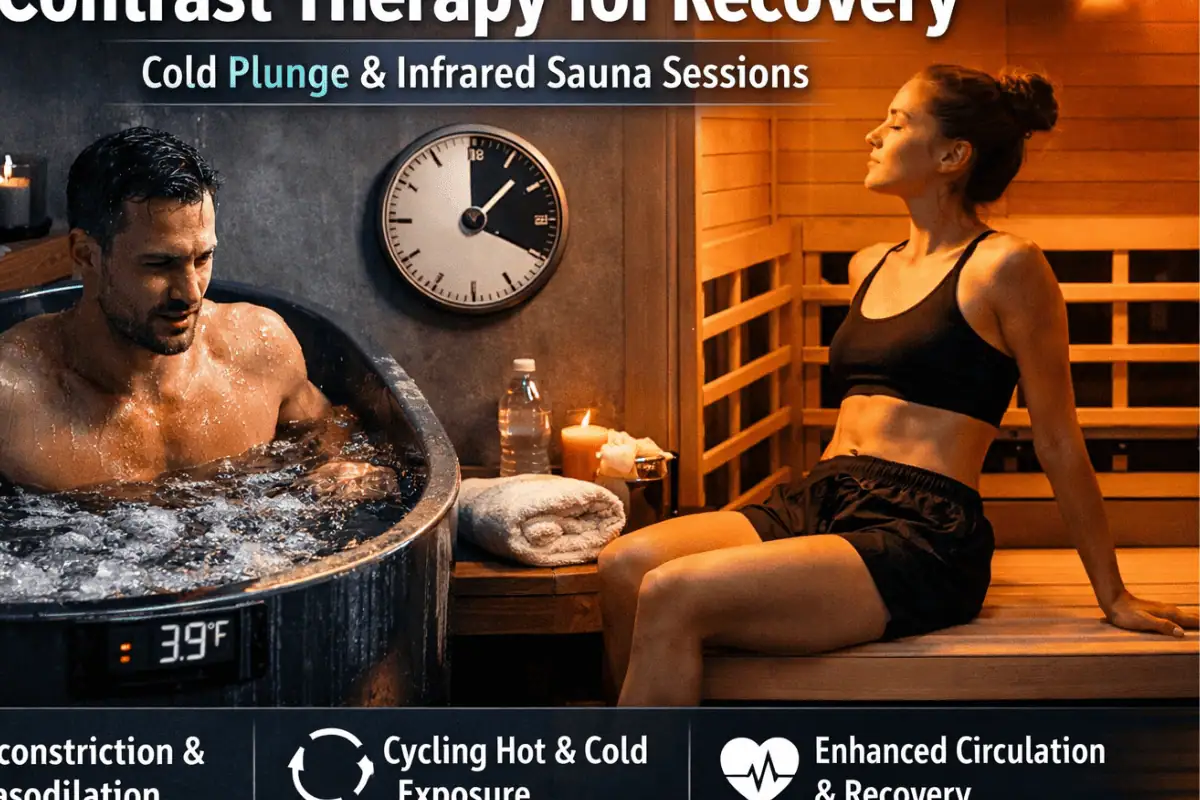
Some individuals alternate between sauna and cold plunge in contrast therapy protocols. The intent is to cycle vasodilation and vasoconstriction.
While popular culturally, scientific evidence remains limited, and contrast therapy should be approached conservatively—especially for beginners.
One reason contrast therapy feels compelling is that it provides a clear “before and after” sensation: warming up, cooling down, and repeating. That experience can be satisfying, but it also makes it easy to push too hard—especially if the person treats the protocol like a challenge rather than a recovery practice.
A conservative approach often prioritizes fewer rounds, moderate heat, and brief cold exposure rather than extreme temperature swings. For many people, one heat exposure followed by a short cold exposure is more than enough to create a strong physiological stimulus.
Gradual exposure, conservative temperatures, and medical clearance are key.
Which Is Better for Athletes?
For athletes, the choice often depends on training phase:
- Post-competition: Cold plunge may reduce soreness perception
- General conditioning: Sauna may support relaxation and circulation
Another useful lens is whether the athlete is prioritizing performance readiness (feeling sharp for the next session) or adaptation (long-term training response). Timing and training context matter, and individual athletes respond differently.
Timing and frequency matter more than modality alone.
Which Is Better for Stress and Mental Health?

Cold plunge can increase alertness and perceived resilience, but it is not inherently calming during exposure. Sauna therapy more consistently aligns with relaxation responses.
A conservative way to interpret “mental benefits” is to focus on state regulation rather than promises. Cold exposure may help some people feel more awake and focused afterward. Heat exposure may help some people feel calmer and more ready for rest. Neither should be treated as a replacement for mental health care when needed.
Individuals seeking downregulation often prefer heat, while those seeking stimulation may prefer cold—especially earlier in the day.
How to Choose Based on Your Goals

If you want a simple decision framework for cold plunge vs sauna, start by identifying your primary goal and then choose the lowest-intensity “dose” that is still repeatable. Consistency usually matters more than extremes.
- Recovery intensity: Cold plunge
- Relaxation and sleep: Sauna
- Cardiovascular conditioning: Sauna
- Mental alertness: Cold plunge
If your goal is recovery, consider whether you respond better to “cool and crisp” stimulation or “warm and loose” relaxation. If your goal is stress regulation, consider whether you need a downshift (sauna) or a reset into alertness (cold plunge).
Finally, the safest long-term approach is usually the one that respects your health profile. If you have uncertainty about cardiovascular risk, blood pressure instability, or heat/cold intolerance, a medical check-in before pushing intensity is a conservative decision.
For structured buying guidance, explore the Best Cold Plunge Tubs Buyer’s Guide.
Cold Plunge vs Sauna: The Bottom Line
Cold plunge and sauna therapy are not competitors as much as complementary tools. Each imposes a different stressor, produces different physiological responses, and serves different goals.
Choosing the right modality—or deciding to use both—depends on timing, health status, and desired outcomes rather than trends or extremes.
For next steps, equipment options, and conservative buying frameworks, continue to the Buyer’s Guide.
If you are new to either modality, consider starting with shorter sessions and moderate temperatures to learn your response before increasing intensity.
