Cold Plunge for Longevity: Can Ice Baths Extend Your Healthspan?
Published: August 15, 2025
Last updated: January 26, 2026

Interest in cold plunge for longevity has grown as more people look beyond short-term recovery toward long-term healthspan—the years of life spent in good health. Cold water immersion is often framed as a resilience tool, but longevity claims require careful separation between plausible biology, early evidence, and speculation.
This guide takes a conservative, evidence-based look at whether cold plunge practices may support healthspan through metabolic, cardiovascular, and cellular stress-adaptation pathways—without overstating outcomes or implying disease prevention.
A practical way to read this article is to treat “longevity” as a question of risk profile + consistency. Even if a mechanism sounds plausible, the real-world value depends on whether a routine is safe enough to sustain for months and years—because longevity-relevant changes typically require repeatable behaviors, not one-off exposures.
Longevity vs Healthspan: What Are We Actually Measuring?
Longevity typically refers to lifespan, while healthspan describes how long the body maintains functional capacity, metabolic stability, and resilience. Most cold exposure research—human and animal—addresses markers related to healthspan rather than lifespan extension itself.
- Metabolic flexibility and insulin sensitivity
- Cardiovascular adaptability
- Stress-response efficiency
- Inflammatory balance

Understanding this distinction helps set realistic expectations and keeps longevity discussions grounded in measurable physiology.
A conservative decision frame: “marker support” vs “outcome claims”
When evaluating cold plunge for longevity, it helps to separate what can be measured in weeks to months (markers) from what would require many years to prove (outcomes). For example, improved cold tolerance, shifts in autonomic balance, or changes in metabolic signaling are all plausible marker-level effects. Lifespan extension is an outcome claim that is far harder to demonstrate in humans.
This distinction is the reason longevity conversations often drift into overconfidence. A mechanism can be real without guaranteeing a long-term outcome. A good rule is to treat cold plunge as a supportive practice for health behaviors you can already defend with strong evidence—like activity, sleep, and overall cardiometabolic health.
How to tell if a longevity claim is too strong
A claim is usually overstated if it implies any of the following:
- Cold plunge “slows aging” in a direct, universal way
- Cold exposure “prevents” disease
- One protocol fits everyone, regardless of risk factors
- Benefits are guaranteed without considering dose and recovery
If you want the broader foundation of cold exposure benefits (beyond longevity framing), see the Cold Plunge Benefits cornerstone page for a more complete overview.
Cold Exposure and Hormesis
Cold plunge functions as a hormetic stressor—a short, controlled challenge that can stimulate adaptive responses. Similar frameworks exist for exercise and caloric restriction, where mild stress encourages repair and resilience rather than damage.

Hormesis does not imply guaranteed benefit. The dose, frequency, and individual context determine whether stress supports adaptation or becomes excessive.
What “dose” means in cold plunge terms
In cold exposure, “dose” is not just water temperature. It includes:
- Temperature (how cold the exposure is)
- Duration (how long the exposure lasts)
- Entry style (gradual entry vs sudden immersion)
- Frequency (how often exposures occur)
- Recovery context (sleep, nutrition, training load, stress levels)
A hormetic routine is usually one where the body experiences a brief challenge followed by adequate recovery. If the challenge is too intense or too frequent, the “stress” component can dominate, and benefits become less likely—especially for people already under heavy training or life stress.
Why hormesis is relevant to healthspan
Healthspan is often discussed as a long-term balance between stress exposure and repair capacity. In theory, controlled stressors can help maintain adaptive capacity as you age. In practice, the most relevant question is: does your cold routine reliably end with recovery? For many people, the first minute of cold exposure is the most physiologically intense, while the recovery phase afterward determines whether the net experience is “challenging but manageable” or “overreaching.”
Metabolic Pathways Linked to Healthspan
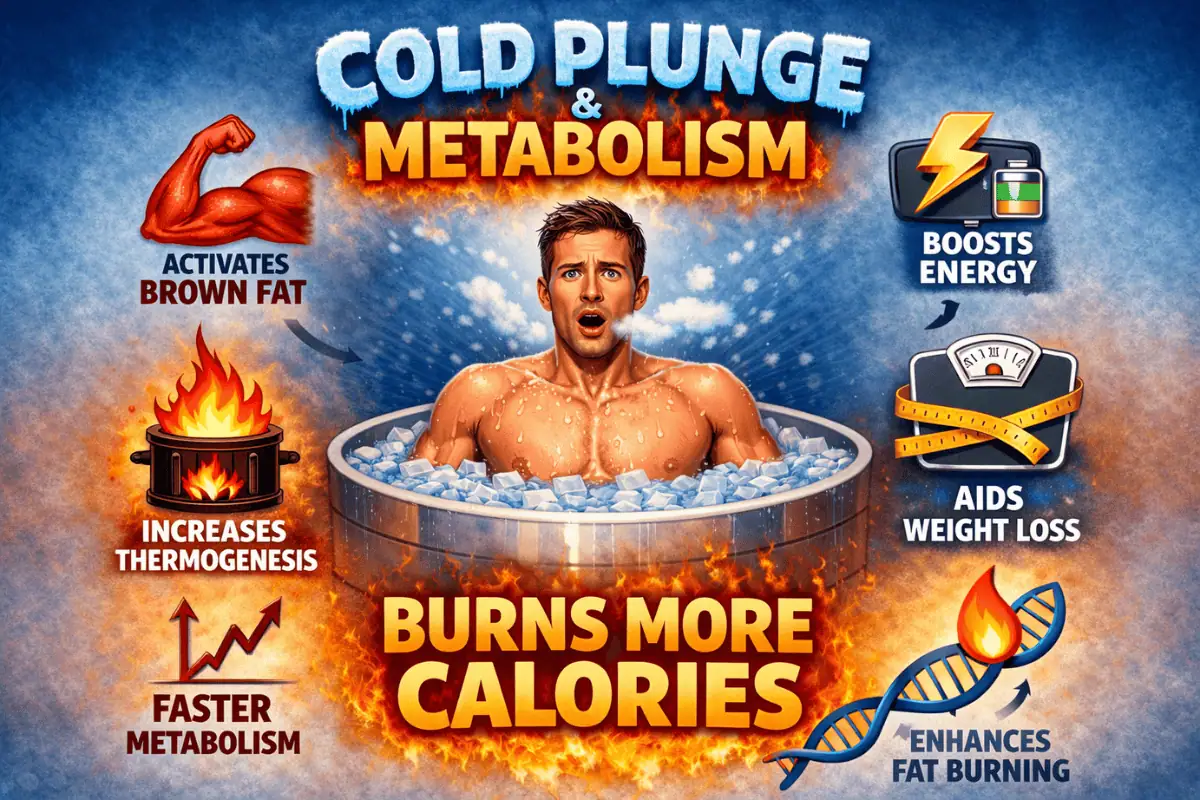
Cold exposure increases energy demand through thermogenesis. Research suggests activation of brown adipose tissue and improved metabolic signaling in some individuals, which may support metabolic health over time.

Human data remain limited, but observational findings align with broader metabolic-health principles rather than lifespan claims.
Why metabolic health is often used as a proxy for healthspan
From a longevity perspective, metabolic stability matters because it is linked to many downstream systems: cardiovascular function, inflammatory balance, and energy regulation. Cold exposure is sometimes framed as a metabolic lever because it can increase short-term energy expenditure and may influence thermogenic pathways.
However, even if cold exposure supports certain metabolic markers, the effect size may be modest compared to foundational drivers like body composition, daily movement, and diet quality. In other words, cold exposure can be a supporting layer, but it is unlikely to “override” weak fundamentals.
Brown fat activation: what it suggests and what it does not
Brown adipose tissue (BAT) is metabolically active and can generate heat by burning fuel. Some human studies examine whether repeated cold exposure increases BAT activity or improves glucose handling. This is a plausible pathway for healthspan-related markers, but it does not establish a direct line to longevity outcomes.
A conservative interpretation is: cold exposure may nudge thermogenic and metabolic pathways in a direction that is generally consistent with metabolic health, especially when paired with healthy lifestyle behaviors.
Decision logic: who should treat metabolic effects as “secondary”
For many people, the most practical metabolic value is not a dramatic “calorie burn.” Instead, it may be that a consistent routine supports daily structure, recovery comfort, or stress management—factors that can indirectly help maintain healthier habits over time.
If your primary goal is longevity, it is reasonable to treat any metabolic benefits from cold plunge as secondary unless your routine is safe, sustainable, and does not compromise sleep or recovery.
Inflammation, Recovery, and Cellular Maintenance
Chronic low-grade inflammation is associated with many age-related conditions. Cold exposure may influence inflammatory signaling by altering blood flow and neuroendocrine responses.

Importantly, inflammation modulation is not the same as suppression. Adaptive balance—not elimination—is what supports long-term tissue health.
Why “less inflammation” is not always the goal
Inflammation is part of normal repair signaling. A key longevity principle is not to eliminate inflammation, but to avoid chronic, unnecessary inflammatory load while preserving appropriate immune and repair responses. Cold exposure may influence inflammatory pathways, but the direction and significance can vary based on timing, intensity, and individual context.
Where cold exposure is often discussed conservatively
Cold therapy is commonly discussed in the context of soreness and perceived recovery comfort. That “recovery feel” may help some people maintain training consistency—an indirect healthspan benefit—without requiring aggressive claims about anti-aging.
Because individuals respond differently, it is safer to interpret cold plunge as a tool that may support comfort and recovery routines rather than as a direct anti-inflammatory intervention for chronic conditions.
Cardiovascular Adaptation and Vascular Flexibility
Repeated cold exposure triggers cycles of vasoconstriction and vasodilation. Over time, this may improve vascular responsiveness in healthy individuals.

These adaptations relate more to functional cardiovascular resilience than to extending lifespan itself.
Why cardiovascular resilience matters for healthspan
Many longevity discussions focus on maintaining functional capacity: the ability to handle physical stress, temperature changes, and daily demands without exaggerated strain. Cold exposure creates an acute cardiovascular stimulus (especially at entry), which is one reason screening and safety matter.
Conservative interpretation of vascular “training”
In theory, repeated exposure to controlled cold stress can help the body become more efficient at managing vascular responses. In practice, the safest interpretation is that cold plunge might support vascular responsiveness in healthy individuals when exposures are appropriate and recovery is adequate.
If someone has known cardiovascular risk factors, the same stimulus may be inappropriate or require medical guidance before attempting cold immersion.
Nervous System Adaptation and Stress Tolerance
Cold plunge induces an acute sympathetic response followed by parasympathetic recovery. This cycle may improve stress tolerance when exposure is gradual and controlled.

Stress resilience is increasingly discussed as a contributor to healthy aging, though it does not equate to slowed biological aging.
Why “recovery after stress” is the key variable
From a nervous system standpoint, the most relevant part of cold exposure is not only the initial sympathetic spike, but the ability to return toward baseline afterward. A routine that reliably ends with calm breathing, stable mood, and normal sleep is more aligned with healthspan goals than a routine that leaves someone wired, depleted, or sleep-disrupted.
Cold plunge as a training environment for breathing control
Cold immersion can create a strong urge to gasp or breathe quickly. That response is automatic and common. Over time, some users aim to practice calmer, more controlled breathing during the first minute, which may help the recovery phase feel smoother. This can be framed as skill-building rather than a longevity guarantee.
If you want a deeper overview of cold exposure and autonomic function, see our Blog Index for related nervous system and stress posts.
What Human Studies Suggest (and Do Not)
Human research on cold exposure focuses on metabolic markers, insulin sensitivity, and autonomic balance—not lifespan extension.
- NIH summaries on cold exposure and metabolism
- PubMed research on cold-induced thermogenesis
- Cleveland Clinic overview of cold therapy effects
No human trials demonstrate lifespan extension from cold plunge practices.
For a conservative medical perspective on cold therapy and practical cautions, Mayo Clinic’s general guidance on cold therapy can be a useful reference point when interpreting claims: Mayo Clinic guidance on cold therapy basics.
Animal Data and Why Translation Is Limited
Some animal studies associate cold environments with altered metabolic signaling and survival patterns. Translating these findings directly to humans is unreliable due to differences in physiology, environment, and lifespan determinants.
Animal data may inform mechanisms but should not be treated as outcomes.
Why animal findings can still be useful (with boundaries)
Animal models can help researchers test hypotheses about thermogenesis, metabolic signaling, and stress-response pathways under controlled conditions that are difficult to replicate in humans. This can clarify what might be possible biologically, even if it does not tell us what will happen in real-world human longevity.
The “ownership reality” of longevity routines
A practical limitation of longevity protocols is that they must be sustainable. Animal studies can impose constant environments or tightly controlled exposures; human life does not work that way. Work schedules, travel, illness, injury, and seasonal changes affect adherence. If a cold plunge routine requires extreme conditions to be maintained, it becomes less likely to deliver any meaningful long-term benefit—regardless of mechanism.
This is why consistency and safety tend to matter more than aggressive optimization. A modest routine repeated over years is more compatible with healthspan logic than an intense routine that cannot be maintained.
How Cold Plunge Fits Among Longevity Practices
Cold plunge overlaps conceptually with other stress-based longevity frameworks:
- Exercise-induced hormesis
- Heat exposure (sauna)
- Caloric cycling
Cold exposure is best viewed as a complementary tool—not a replacement for foundational health behaviors.
Where cold plunge may fit best
For many people, cold exposure fits best as:
- A short routine that supports consistent training and recovery habits
- A resilience practice used a few times per week rather than daily extremes
- A complementary stimulus to heat exposure and exercise, spaced for recovery
From a conservative healthspan standpoint, the “best” protocol is usually the one that supports the bigger pillars: strength maintenance, aerobic capacity, sleep quality, and stable cardiometabolic markers.
Safety Considerations for Long-Term Use
Older adults or individuals with cardiovascular conditions should approach cold exposure cautiously. Sudden immersion can trigger dangerous cardiovascular responses.

For detailed precautions, see our Cold Plunge Safety & Usage guide.
A conservative safety checklist for longevity-minded users
Because healthspan strategies are long-term, safety and repeatability are non-negotiable. Conservative considerations include:
- Start with milder temperatures and shorter durations before progressing
- Avoid breath-holding or hyperventilation in water
- Exit if you feel chest pain, dizziness, confusion, or unusual weakness
- Prioritize warm, calm recovery afterward (especially in cold ambient environments)
If you have questions about suitability, equipment setup, or risk factors, you can reach us via the Contact page for general guidance and resources.
Practical Takeaways
- Cold plunge may support healthspan-related markers, not lifespan
- Benefits depend on consistency, moderation, and recovery
- Evidence supports adaptation—not anti-aging claims
A simple longevity-aligned approach (non-prescriptive)
If your goal is “healthspan support,” a conservative approach is to keep cold exposure repeatable and recoverable. That often means treating intensity as optional and consistency as the priority. For example, some people choose a routine where the final outcome is feeling calm and stable afterward, rather than chasing the coldest temperature possible.
What to track without overinterpreting
Because longevity outcomes are hard to measure, it can be more useful to track routine-level signals:
- Sleep quality and next-day energy
- Training consistency and perceived recovery comfort
- Stress tolerance and ability to return to calm after exposure
- Whether the routine remains safe and sustainable across seasons
If cold exposure consistently harms sleep, elevates stress, or causes frequent adverse sensations, it may be a poor match for healthspan goals even if the mechanisms are theoretically interesting.
Explore Equipment Options
Compare cold plunge systems and setups based on home use, safety, and long-term consistency. View Buyer’s Guide →
For readers who prefer to start with fundamentals, the Cold Plunge Benefits page provides a broader, less “longevity-branded” explanation of common mechanisms and practical use cases.
Conclusion: What Cold Plunge Can—and Cannot—Do for Longevity
Cold plunge is best understood as a resilience practice that may support metabolic health, stress adaptation, and cardiovascular flexibility—factors associated with healthy aging. Current evidence does not support claims that cold exposure extends lifespan.
When practiced safely and consistently, cold plunge can complement broader healthspan strategies rooted in movement, nutrition, recovery, and medical guidance.
If you want to make cold exposure practical and sustainable, focus on a routine you can maintain for years—not extremes that increase risk or reduce adherence.
