Cold Plunge for Anxiety: Can Ice Water Calm Your Mind?
Published: July 15, 2025
Last updated: January 26, 2026

Interest in cold plunge for anxiety has grown alongside broader conversations about nervous system regulation, stress resilience, and mental health support. Cold water immersion is often discussed as a way to “reset” the nervous system, but its effects are physiological first—not psychological shortcuts.
This guide explains how cold plunge therapy may influence anxiety through measurable nervous system mechanisms, what benefits are plausible, where limits exist, and how to approach cold exposure conservatively and safely.
Anxiety Through the Lens of the Nervous System
Anxiety is closely linked to how the autonomic nervous system responds to perceived threat. Many people with anxiety experience a persistent state of sympathetic activation—often described as being “stuck” in fight-or-flight.
Cold exposure does not remove anxiety triggers, but it can temporarily and repeatedly challenge the nervous system in a controlled way, offering a strong physiological stimulus that the body must adapt to.
A practical way to think about this is to separate anxiety symptoms (what you feel) from autonomic patterns (what the body is doing). Symptoms can include worry, restlessness, or rumination, while autonomic patterns often include:
- Elevated baseline arousal (feeling “on edge” even in safe settings)
- Faster, shallower breathing and a stronger startle response
- Heightened body scanning (noticing heartbeat, chest tightness, stomach sensations)
- Difficulty downshifting into calm after a stressful event
Cold immersion places the body into a short, clear stress signal. The goal is not to “override” anxiety with discomfort. The goal is to create a controlled window where you can practice recovery: steady breathing, staying present, and letting the body settle after an acute stressor.
It can also help to understand two concepts that are often conflated:
- Sympathetic activation (stress response): a normal surge in arousal that prepares the body for action
- Autonomic recovery (return to baseline): how efficiently your body returns to calm after activation
In anxiety-prone individuals, the “activation” part may be strong and frequent, and the “recovery” part may be slow. If cold exposure is introduced conservatively, it may function as repeated practice in recovery—not as a cure, but as a training stimulus for regulation.

Learn more about baseline mechanisms in our cold plunge nervous system guide.
For a broader overview of what cold exposure may (and may not) do, see our Cold Plunge Benefits page. If you have questions about whether this approach fits your situation, you can also reach us via the Contact page.
What Happens in the Body During a Cold Plunge
When cold water contacts the skin, temperature receptors rapidly signal the brain. This produces an immediate sympathetic response: increased breathing rate, elevated heart rate, and vasoconstriction.
For someone with anxiety, this response may initially feel intense. Over time, repeated controlled exposure can help the nervous system recover more efficiently after stress.
For anxiety-related goals, the most relevant part is not how “tough” the first seconds feel—it’s how reliably you can move from activation toward steadier breathing and a calmer internal state. That shift is a form of regulation practice.
Two physiological processes are especially relevant:
- Vasoconstriction: blood vessels narrow to conserve heat, often changing how hands, feet, and skin feel
- Respiratory reflexes: cold can rapidly increase breathing rate unless you deliberately slow and control it
If you want a deeper look at circulation changes, you may find it useful to review how cold exposure affects blood flow and temperature regulation on our Blog Index where related guides are organized in one place.

According to research summarized by the National Institutes of Health, acute cold exposure activates stress pathways but is followed by adaptive recovery when exposure is controlled.
From a conservative perspective, it’s important to note what this does not imply. A strong acute stress response does not automatically equal long-term improvement in anxiety. Adaptation typically requires:
- Gradual exposure (temperature and duration)
- Consistency over time (weeks, not days)
- Enough recovery (sleep, nutrition, overall stress load)
Cold Plunge, Stress Hormones, and Anxiety
Cold water immersion increases the release of stress hormones such as norepinephrine. These chemicals are involved in alertness, focus, and arousal.
While elevated stress hormones may sound counterproductive for anxiety, the key factor is duration and recovery. Short, controlled exposure may train the body to regulate these signals more efficiently over time.
Norepinephrine (also called noradrenaline) is often discussed because it can increase attention and wakefulness. In everyday terms, it can feel like “clarity” or “activation.” For some people, that can be experienced as helpful energy. For others—especially those sensitive to bodily arousal—it can feel like anxiety. This is one reason conservative dosing matters.
A useful decision lens is to ask: Does cold exposure help you practice regulation, or does it repeatedly push you into overwhelm? Those are not the same experience, and they can lead to different outcomes.
When cold exposure is too intense (too cold, too long, or introduced during a high-stress period), you may notice signs that it is acting as an additional stressor rather than a supportive practice:
- Persistent agitation after sessions (instead of a return to baseline)
- Sleep disruption on plunge days
- Increasing dread or avoidance before plunging
- More frequent panic-like symptoms during immersion
When dosing is appropriate, some people report a different pattern:
- A quicker shift from “shock” to steady breathing
- More confidence handling body sensations (heartbeat, breathing changes)
- A clearer “recovery” feeling after exit (calm focus rather than jitters)

A review indexed on PubMed notes that cold exposure can increase catecholamines without the prolonged cortisol elevation seen in chronic stress.
For readers comparing interventions, it may help to keep expectations conservative: cold exposure may influence arousal and perceived stress in the short term, but anxiety is multifactorial. Cold plunge is best viewed as one potential input into a larger plan, not the plan itself.
Breathing Response and Anxiety Regulation
One of the most noticeable effects of cold plunge is the urge to gasp or hyperventilate. Learning to slow breathing during cold exposure is a core adaptation skill.
This breathing control may translate into improved regulation during anxiety-provoking situations outside the tub.
For anxiety-prone individuals, the breathing response matters because rapid breathing can amplify physical sensations that resemble panic (lightheadedness, chest tightness, tingling). A conservative approach is to treat the first seconds of immersion as a breathing drill rather than an endurance challenge.
Simple cues many people find helpful include:
- Exhale first before stepping in (reduces the “gasp” pattern)
- Slow the out-breath (a longer exhale often supports settling)
- Anchor attention on the sensation of air moving through the nose
- Relax the shoulders and jaw (tension can worsen perceived intensity)
If anxiety symptoms rise sharply during immersion, an evidence-aligned decision is to shorten the session or raise the water temperature rather than “pushing through.” The goal is controlled exposure, not forced tolerance.

The Cleveland Clinic emphasizes slow nasal breathing as a key tool for calming sympathetic activation.
Over time, the skill you are practicing is not “being calm in cold water.” It is recognizing activation and guiding recovery. That distinction keeps the practice aligned with nervous system regulation rather than performance mentality.
Why Some People Report Reduced Anxiety After Cold Plunge
Many people report temporary mental clarity or calm after cold exposure. This effect is likely related to neurotransmitter shifts, increased alertness, and the contrast between stress and recovery.
It is important to note that these effects are transient and supportive—not a treatment for anxiety disorders.
A conservative interpretation is that cold exposure can create a brief “state change” driven by physiology. After a short, intense stimulus, the body often transitions into a recovery phase. That recovery can feel like:
- Reduced rumination (attention narrows to the present moment)
- Improved perceived control over breathing and body sensations
- Shift in stress perception (a clearer sense of “I can handle this”)
However, not everyone experiences calm afterward. Some people feel wired, especially with colder temperatures, longer exposure, or late-day plunges. If the goal is anxiety support, it can be reasonable to test timing (morning vs afternoon) and keep sessions short.
For related context on mood and wellbeing claims, you may also want to compare this topic with our broader mental health overview: Cold Plunge for Mental Health.
Limitations and What Cold Plunge Cannot Do
Cold plunge therapy does not address the root psychological, behavioral, or situational causes of anxiety. It should not be viewed as a replacement for therapy, medication, or professional care.
For some individuals, especially those with panic disorder, cold exposure may temporarily worsen symptoms if introduced too aggressively.
It can also help to be clear about what “works” means in this context. Cold plunge may be supportive if it helps you:
- Practice controlled breathing during a stress response
- Build confidence with safe, temporary body sensations
- Improve recovery after stress (downshifting to baseline)
Cold plunge is unlikely to be helpful if it becomes:
- A compulsion (using cold to “escape” anxiety rather than address it)
- A form of self-punishment or forced exposure
- A trigger for repeated panic symptoms
For readers who are working with a clinician, it can be reasonable to frame cold exposure as an optional regulation practice, similar to exercise or breathwork—not as a mental health intervention. The Mayo Clinic and Cleveland Clinic both emphasize individualized approaches to stress and anxiety support rather than one-size-fits-all solutions.

Safety Considerations If You Experience Anxiety
If anxiety is part of your baseline, the safest approach is to reduce variables and make sessions predictable. A predictable routine helps you interpret body sensations as normal cold responses rather than “something is wrong.”
- Start with higher temperatures (55–60°F)
- Limit initial exposure to 30–60 seconds
- Focus on controlled breathing before immersion
- Avoid cold plunge during acute panic episodes
Additional conservative safety notes that often matter for anxiety-prone plungers:
- Avoid breath-holding contests: stay with calm, continuous breathing
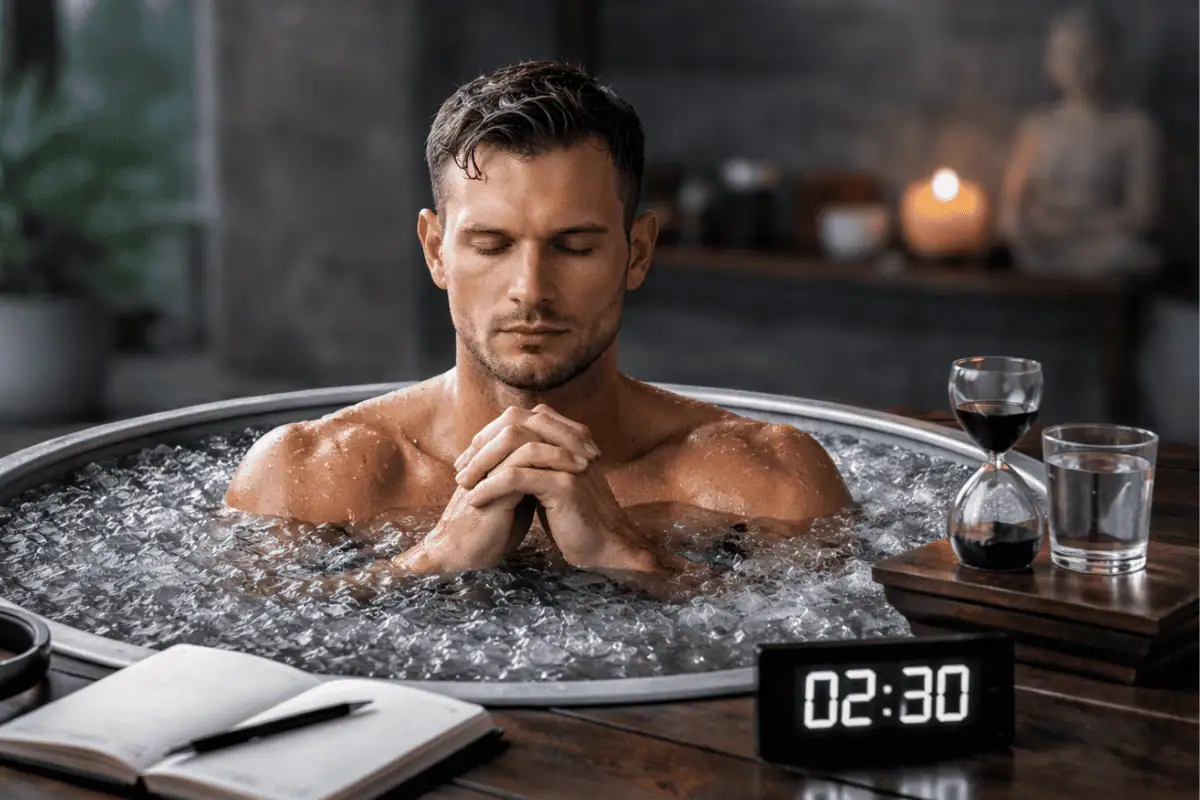
- Use a timer you can see: uncertainty about time can increase stress
- Choose safe entry/exit: slipping risk increases when rushing
- Never plunge alone if you have a history of fainting or severe panic symptoms

Review broader guidance on our Cold Plunge Safety & Usage page.
How Often to Use Cold Plunge for Anxiety Support
Consistency matters more than intensity. Many people experiment with 2–4 sessions per week to allow nervous system recovery.
Daily plunging is not necessary for anxiety-related goals and may increase stress load if recovery is insufficient.
A conservative routine design starts with two questions:
- How stressed is your current baseline? (sleep, workload, life events, training volume)
- How do you respond after sessions? (calm recovery vs agitation or insomnia)
If your baseline stress is high, adding frequent cold exposure can act like “another workout” for the nervous system. In that case, fewer sessions (1–2 per week) with higher temperatures may be more appropriate until recovery improves.
If your goal is anxiety support, it can be reasonable to prioritize repeatability over intensity. The most useful session is often the one that feels challenging but manageable—followed by clear recovery.

For additional planning guides, browse the Plunge Sage Blog Index where temperature, duration, and frequency topics are organized.
Cold Plunge Compared to Other Anxiety Regulation Tools
Cold plunge may complement other regulation practices such as breathwork, mindfulness, exercise, and sleep hygiene.
The Mayo Clinic emphasizes that lifestyle-based stress management works best when multiple tools are combined rather than relying on a single intervention.
Cold plunge is somewhat unique because it provides a fast, measurable physiological stressor. Other tools may be lower-intensity but easier to use daily (walking, slow breathing, consistent sleep timing). For many people, the best approach is to pair cold plunge with at least one low-intensity practice that supports baseline regulation.

Who Should Avoid Cold Plunge or Seek Medical Guidance
Individuals with cardiovascular disease, uncontrolled hypertension, or severe panic disorders should consult a clinician before attempting cold immersion.
Cold plunge should always be optional—not forced—as a nervous system stressor.
If you have a history of panic attacks, it may be especially important to avoid “extreme” protocols (very cold water, long durations, competitive breath control). A clinician can help you evaluate whether controlled cold exposure fits safely into your plan, particularly if you’re managing medications or other health conditions.

When Cold Plunge May Be a Reasonable Support Tool
Cold plunge may be appropriate for individuals seeking structured exposure to stress with controlled recovery, especially when paired with breathing awareness and gradual progression.
It works best as part of a broader wellness framework rather than a standalone solution.
A reasonable “fit” often looks like this:
- You can keep breathing steady within the first minute
- You feel a clear recovery phase after exiting (not prolonged agitation)
- You can maintain consistency without escalating intensity
- You are not using cold exposure to avoid professional help when needed
If you’re deciding whether to invest in a consistent setup (versus occasional cold showers or seasonal cold water), the decision should be based on safety, practicality, and consistency—not hype. Your equipment does not have to be extreme to be useful.
For equipment considerations, explore our Best Cold Plunge Tubs Buyer’s Guide.
If you want to compare cold exposure to other common recovery tools, you may also find it helpful to review the broader benefit landscape on Cold Plunge Benefits.
Conclusion: Cold Plunge and Anxiety in Context
Cold plunge therapy may influence anxiety indirectly by challenging and training the nervous system’s stress-response pathways. Its benefits are physiological and supportive—not curative.
For those considering cold plunge for anxiety, a conservative approach focused on safety, breathing control, and consistency is essential. Used appropriately, cold exposure can be one tool among many in a broader mental health support strategy.
Next steps: review cold plunge benefits, safety guidelines, and equipment options before deciding whether this practice fits your needs.
