
Chest Freezer Cold Plunge Review

A chest freezer conversion is one of the most frequently discussed “DIY cold plunge” builds online. In this chest freezer cold plunge review, we’re taking a conservative, safety-first look at what this setup actually involves, what results people commonly report, and where the risks and tradeoffs become hard to ignore.
Chest freezers were engineered to keep food frozen in a dry interior environment. A cold plunge tub is the opposite: constant water exposure, regular human immersion, and ongoing sanitation demands. That mismatch matters. This review focuses on practical realities (temperature stability, maintenance, water quality, comfort) and the two areas that deserve the most caution: electrical safety and sanitation.
If you’re deciding between DIY and purpose-built options, start with the comparison framework in the Best Cold Plunge Tubs (Buyer’s Guide).
What a Chest Freezer Cold Plunge Setup Usually Includes

Most chest freezer cold plunge builds follow the same general pattern: a freezer is sealed, filled with water, and paired with add-ons to improve temperature control and reduce (not eliminate) risk.
Common components people use include:
- Chest freezer unit (interior becomes the water basin)
- Sealant / waterproofing strategy (especially seams and drain points)
- External temperature controller (to prevent overcooling and reduce cycling)
- Water circulation (some builds add a small pump to reduce hot/cold zones)
- Basic sanitation approach (typically manual cleaning + water changes; sometimes chemicals)
- Safe electrical setup (GFCI protection, drip loops, and conservative placement of cords)
Even when these pieces are included, the core limitation remains: the unit wasn’t designed to safely operate as a water-filled immersion device. That doesn’t automatically mean failure, but it does mean your margin for error is smaller than with purpose-built systems.
Temperature Control: Can You Keep It in a Safe, Useful Range?

Cooling performance is one of the main reasons people attempt a chest freezer plunge: compressors can pull water temperature down without buying a dedicated chiller. The challenge is not whether it can get cold — it’s whether it can stay in a stable, intentional range.
Without an external controller, a freezer can drive water well below typical cold plunge ranges, especially if left running continuously. In DIY setups, “too cold” can happen quietly over time, and that’s where safety concerns grow.
From a conservative standpoint, temperature planning should account for:
- Water stratification (top vs bottom temperature differences without circulation)
- Rapid drops overnight if the unit cycles longer than expected
- Inconsistent readings depending on probe placement
- Seasonal ambient changes (garage vs basement vs indoor room)
Another practical issue is compressor cycling frequency. Chest freezers are designed for relatively stable internal temperatures, not frequent on–off cycling driven by water temperature changes. When paired with external controllers, this can lead to short cycling, which increases mechanical wear and reduces long-term reliability.
From a user experience standpoint, inconsistent temperature control can also affect perceived intensity. Even small swings of a few degrees can change how stressful a session feels, especially for beginners who are still adapting to cold exposure.
Cold exposure also drives predictable physiological stress responses (fast breathing, elevated heart rate, and strong skin sensation). For background on what “normal responses” typically look like — and what should be treated as a stop signal — see Cold Plunge Benefits, which also covers common acclimation patterns.
For readers who want a research starting point on cold water immersion and recovery outcomes, PubMed hosts multiple studies and reviews; see peer-reviewed cold water immersion research on PubMed.
Electrical Risk: The Core “Non-Negotiable” Concern
The biggest downside of a chest freezer cold plunge is simple: you’re combining water + electricity in a device that was not designed for wet operation or human immersion. That’s the risk category that separates “DIY inconvenience” from “potentially catastrophic outcome.”
Even if a build runs for months without an incident, risk can increase over time due to condensation, corrosion, insulation breakdown, or sealant failure. DIY success stories often focus on temperature results, but they rarely capture the long-term reliability question: what changes after repeated cycles, repeated refills, and repeated exposure?
A conservative safety posture typically includes:
- GFCI protection on the circuit powering the unit
- Drip loops on cords to prevent water tracking into outlets
- Strict separation between any powered components and splash zones
- Power-off rule during entry/exit for risk reduction (where practical)
- No solo sessions if you’re using any DIY system with elevated risk
Medical organizations repeatedly emphasize caution with cold exposure for people with cardiovascular conditions and for environments where risk is increased. As a general reference point for cold exposure cautions and who should get medical clearance first, see Mayo Clinic guidance on cold exposure and health considerations.
Comfort and Ergonomics: How It Feels vs Purpose-Built Tubs
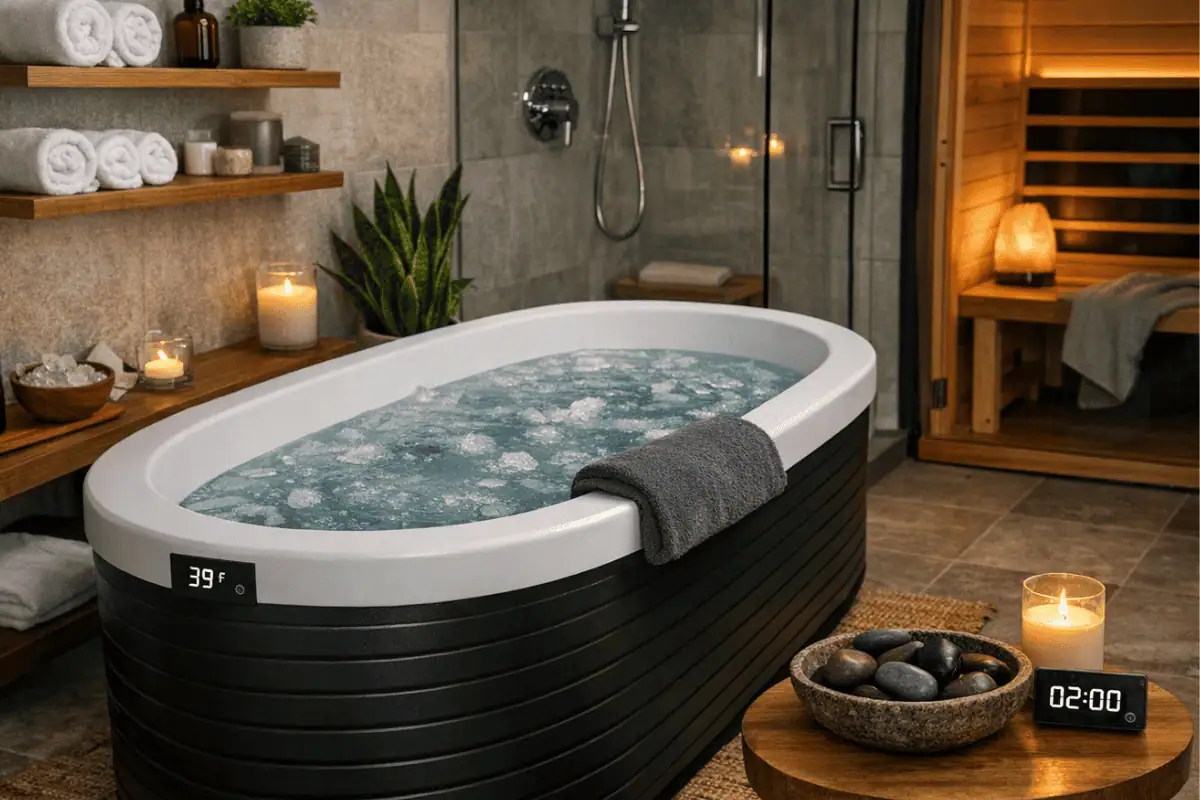
Comfort is an under-discussed issue in DIY freezer plunges. A chest freezer is a rectangular box with hard edges, limited internal depth, and a shape that often forces awkward posture. In a cold plunge, posture matters: if you’re bracing uncomfortably, you may create unnecessary muscular tension rather than a calm “reset” response.
What users typically report in freezer-style plunges:
- Tight knee/hip angles if the interior is short or narrow
- Pressure points on glutes, back, or shoulders against hard surfaces
- Difficult entry/exit (especially for taller users)
- More movement to find a tolerable position — which can feel worse in cold water
If your goal is consistency, comfort becomes a compliance factor. An uncomfortable setup tends to produce shorter sessions, more “skipped days,” and less predictable outcomes — even if the temperature is technically adequate.
Water Quality and Sanitation: The Unsexy Part That Matters Most

Cold water can slow microbial growth, but it does not sterilize. In other words: cold temperatures may reduce how quickly problems develop, but they don’t remove the need for sanitation. This is where chest freezer builds often become “high-effort ownership.”
Most freezer plunges do not include:
- Integrated filtration sized for a human-use tub
- Circulation designed to prevent stagnant zones
- UV or ozone sanitation systems (common in premium tubs)
- Materials engineered for long-term water exposure
As a result, DIY owners often rely on some combination of: frequent water changes, manual scrubbing, careful shower/rinse habits before entry, and sometimes chemical management. Over time, seams, corners, and hidden surfaces can become biofilm-prone.
Sanitation challenges tend to increase when multiple people use the same DIY plunge. Without consistent filtration and circulation, organic load accumulates faster, requiring more frequent water changes to maintain acceptable hygiene.
Over time, this maintenance burden becomes one of the main reasons users abandon freezer-based setups, even if cooling performance itself remains adequate.
For a medical reference point on infection risk and why water cleanliness matters (especially if you have cuts, skin conditions, or compromised immunity), see Cleveland Clinic guidance on skin and infection prevention principles.
Maintenance Reality: Draining, Cleaning, and Daily Friction
A chest freezer plunge can become “maintenance heavy” for reasons that are structural, not personal preference. Many units don’t drain efficiently, and moving a water-filled freezer is not realistic. That means draining and refilling can be slow, messy, and easy to postpone — and postponement is where water quality issues tend to grow.
From a practical ownership standpoint, the most important question is not “Can I build it?” but:
- Can I keep it clean consistently?
- Can I manage water replacement without dread?
- Do I have a plan for leaks, mold, or corrosion?
If your honest answer is “maybe,” a simpler system (even a lower-tech approach) can sometimes be more sustainable over months and years.
Chest Freezer vs Other At-Home Options: A Simple Comparison Table

Below is a simplified comparison to help clarify where chest freezer plunges fit in the broader at-home spectrum. (This is not a product ranking; it’s a tradeoff map.)
| Option | Cooling Method | Sanitation Burden | Key Risk / Limitation | Best Fit |
|---|---|---|---|---|
| Chest freezer plunge | Compressor (active) | High (DIY-dependent) | Electrical + water exposure mismatch | Technically skilled DIY users prioritizing cooling cost |
| Stock tank + ice | Ice (manual) | Moderate | Ongoing ice cost + temp variability | Budget users who want simplicity |
| Inflatable/portable tub + ice | Ice (manual) | Moderate | Durability + insulation limits | Testing the habit before investing |
| Purpose-built tub (commercial) | Chiller / integrated cooling | Lower (system-based) | Higher upfront cost | Consistency, safety margin, convenience |
If you want to compare purpose-built categories (luxury vs budget vs outdoor vs chiller-based), use the navigation structure on the Blog Index and the main Buyer’s Guide.
Who This DIY Approach Might Actually Be For
A chest freezer build is not “beginner friendly” in the way that phrase is often used. It can be a fit for a specific type of user, but that fit is usually based on skills and risk tolerance, not just budget.
This approach may be most appropriate if you:
- Have strong DIY competence (including basic electrical safety awareness)
- Can set up a conservative control system (temperature and power safety)
- Are willing to maintain a strict sanitation routine
- Have a space where leaks or condensation won’t become a long-term home issue
- Prioritize “active cooling on a budget” over convenience
It’s typically a poor fit if you want minimal maintenance, if the plunge will be used by multiple household members, or if the system will live in a shared indoor space where humidity and moisture are hard to manage.
Safety and Contraindications: When to Avoid Cold Plunging or Get Clearance

Cold immersion can create a rapid stress response: strong skin sensation, involuntary gasping, faster breathing, and cardiovascular load changes. For many healthy adults, conservative exposure is tolerable — but there are clear situations where medical clearance is wise.
Common reasons to avoid unsupervised cold plunging or to speak with a clinician first include:
- Known heart disease, arrhythmias, or history of fainting
- Uncontrolled high blood pressure
- Pregnancy (individualized guidance recommended)
- Peripheral neuropathy or impaired temperature sensation
- Open wounds, skin infections, or compromised immune status
For a conservative overview of cold exposure cautions and “when to be careful,” see Mayo Clinic cold exposure and health guidance. For broader background on stress physiology and adaptation, the NIH’s NCBI resources can be a helpful starting point; see NIH (NCBI) health information resources.
Cost and “Hidden Costs”: What People Don’t Budget For
The headline appeal is usually cost: “I can build a chiller-style plunge for less.” Sometimes that’s true upfront. But DIY freezer builds often have hidden costs that show up over time.
Common overlooked cost categories include:
- Temperature controller + probes (and replacements when they fail)
- Sealants, liners, and repair materials over multiple cycles
- Electricity usage (especially in warm climates or uninsulated garages)
- Water replacement (frequency increases if sanitation is hard to stabilize)
- Failure risk (compressor issues, corrosion, leaks)
There is also an opportunity cost to consider. Time spent troubleshooting temperature swings, addressing leaks, or cleaning more frequently is time not spent actually using the plunge. For some users, that friction alone outweighs the initial savings.
When you consider total ownership cost, some DIY builds move closer to entry-level commercial options — but without the same safety margin or convenience.
Pros, Cons, and Bottom-Line Verdict
Here’s the clearest way to summarize this chest freezer cold plunge review: it can work as a cooling container, but it carries a higher risk profile and higher maintenance burden than most people expect.
Potential Pros
- Active cooling without buying a dedicated chiller
- Lower upfront cost (in many cases)
- DIY customization for space constraints
Significant Cons
- Electrical safety risk due to water + powered appliance mismatch
- Sanitation challenges without integrated filtration/UV/ozone systems
- Comfort and entry/exit limitations vs immersion-shaped tubs
- Longevity uncertainty (condensation + corrosion over time)
- Higher daily friction (cleaning and water changes)
If your primary goal is consistency, low stress ownership, and a larger safety buffer, a purpose-built option will usually be the better long-term decision — even if it costs more upfront.
Conclusion and Next Steps
This chest freezer cold plunge review comes down to a straightforward tradeoff: you may gain low-cost active cooling, but you accept increased responsibility for electrical safety, sanitation, and long-term reliability. For a technically skilled DIY user with a conservative approach, it can be workable. For most households, the risk and maintenance profile is the deciding factor.
Next steps: compare safer purpose-built categories in the Best Cold Plunge Tubs (Buyer’s Guide) and review baseline physiology, adaptation expectations, and conservative usage guidance on Cold Plunge Benefits.
If you want to suggest an update, report an error, or ask for coverage of a specific DIY configuration, you can reach us here: Contact Plunge Sage.
