Cold Plunge for Stress Relief: Can Ice Baths Lower Cortisol and Calm the Nervous System?
Published: August 24, 2025
Last updated: January 30, 2026

Chronic stress is one of the most common—and least well-managed—health challenges in modern life. As interest in nervous system regulation grows, many people are asking whether cold plunge for stress relief is more than a trend.
This article examines whether cold water immersion can influence cortisol levels, calm the nervous system, and improve stress resilience—using conservative, evidence-based interpretation rather than hype.
How Stress and Cortisol Affect the Body

Cortisol is a glucocorticoid hormone released by the adrenal glands in response to perceived stress. In short bursts, it is adaptive. Chronically elevated cortisol, however, is associated with fatigue, sleep disruption, mood changes, and metabolic dysregulation.
Stress responses are mediated primarily by the hypothalamic–pituitary–adrenal (HPA) axis. Interventions that influence nervous system signaling may indirectly affect cortisol patterns rather than suppressing cortisol outright.
Cortisol also follows a circadian rhythm, typically peaking in the early morning and declining throughout the day. Disruptions to sleep, irregular schedules, and persistent psychological stress can alter this rhythm, leading to patterns that feel subjectively exhausting even when absolute cortisol levels are not extreme.
From a conservative physiological standpoint, stress-related symptoms often reflect impaired recovery rather than excessive cortisol alone. When the HPA axis is repeatedly activated without sufficient resolution, downstream effects may accumulate across sleep quality, energy regulation, and emotional stability.
Because of this, interventions aimed at stress relief are often evaluated not by whether they lower cortisol at a single time point, but by whether they support more predictable stress–recovery cycles over time.
Another helpful framework is the idea of allostatic load—the cumulative “wear and tear” from repeated activation of stress-response systems. In this model, the problem is not that cortisol exists, but that the body is asked to stay in a stress-ready state too frequently or for too long.
It is also important to acknowledge that cortisol is difficult to interpret without context. Cortisol can be measured in blood, saliva, or urine, but levels vary substantially by time of day, sleep, recent exercise, illness, caffeine intake, and even anticipation of a stressful event.
As a result, when people ask whether cold immersion “lowers cortisol,” the most conservative answer is that the more meaningful target is stress reactivity and recovery—how quickly the body returns to baseline after activation—rather than a single hormone reading.
Cold Exposure and the Nervous System

Cold plunge exposure is a strong sensory stimulus that initially activates the sympathetic nervous system. This includes rapid breathing, heart rate changes, and heightened alertness.
Paradoxically, repeated controlled exposure may improve nervous system flexibility—shifting from exaggerated stress responses toward faster recovery and parasympathetic re-engagement.
This concept is often described as autonomic adaptability, referring to the nervous system’s ability to shift efficiently between activation and recovery states. In chronic stress conditions, this adaptability may be reduced, leading to prolonged arousal even after stressors pass.
Cold exposure presents a clearly defined stimulus with a predictable onset and offset. When approached conservatively, this can provide repeated opportunities for the nervous system to practice returning to baseline after activation.
Over time, this pattern may contribute to improved tolerance of everyday stressors, not because the stressors disappear, but because recovery becomes more efficient.
A key detail is that the earliest phase of immersion often triggers a cold shock response, especially when the face and upper chest contact cold water. This can include an involuntary gasp reflex and rapid breathing, which is one reason cold plunge should be approached cautiously and progressively.
From a stress-relief standpoint, “calming” effects are less likely to come from the first 10–30 seconds and more likely to come after breathing steadies and the body begins to tolerate the stimulus without escalating.
In conservative terms, the goal is not to eliminate sympathetic activation—some activation is expected—but to improve the ability to downshift and re-engage calmer physiology after the initial response.
Can Cold Plunge Reduce Cortisol Levels?

Research does not suggest that cold plunging directly suppresses cortisol in the moment. In fact, acute cold exposure often causes a temporary rise in stress hormones.
However, studies referenced by PubMed and the NIH indicate that repeated exposure may reduce baseline stress reactivity over time by improving autonomic balance.
This distinction is important. Acute increases in cortisol during cold exposure reflect a normal adaptive response rather than harm. The potential stress-related benefit lies in whether repeated exposure changes how strongly the system reacts to future stressors.
Rather than lowering cortisol directly, cold plunge may influence upstream regulatory mechanisms, including sensory processing, autonomic signaling, and breathing control, which collectively shape stress hormone patterns.
From an evidence-based perspective, cold plunge is best understood as a potential modulator of stress responsiveness rather than a direct cortisol-lowering intervention.
Another conservative interpretation is that any “cortisol benefit” would be expected to appear gradually, as a secondary effect of improved sleep, improved recovery, and reduced day-to-day stress amplification—not as an immediate hormonal switch.
Timing may matter for some people. If cold exposure is overly stimulating late in the day, it could interfere with wind-down or sleep in certain individuals. In those cases, the net stress effect could be neutral or negative even if the practice is otherwise well-tolerated.
For that reason, stress-focused cold plunge routines often emphasize moderation: comfortable-to-challenging temperatures, short duration, and consistent repetition—rather than maximal cold intensity that keeps the body in a prolonged “alarm” state.
Reducing Stress Reactivity vs Eliminating Stress

Cold plunge therapy does not remove stressors. Instead, it may influence how the body perceives and responds to them.
- Improved tolerance to discomfort
- Faster physiological recovery after stress
- Greater perceived emotional control
This distinction matters because many stress-related complaints arise not from the presence of stress itself, but from heightened reactivity or delayed recovery following stress exposure.
Cold exposure introduces a controlled form of discomfort that can be voluntarily entered and exited. When managed conservatively, this may reinforce a sense of agency over physiological stress responses.
Over time, this pattern may contribute to improved confidence in handling stress rather than reducing stress load itself.
A useful decision lens is to treat cold plunge as a dose-dependent stimulus. Temperature, duration, and frequency collectively determine whether a session feels “energizing,” “neutral,” or “too activating.”
For stress relief specifically, more is not automatically better. If the session consistently produces prolonged shivering, agitation, or persistent elevated arousal afterward, the dose may be too high for the intended goal.
In contrast, sessions that begin with a normal spike of discomfort but transition into stable breathing and steady control may be more consistent with stress-recovery training rather than stress accumulation.
Breathing, Cold Exposure, and Stress Regulation

One of the most important variables in cold plunge stress response is breathing. Slow, controlled breathing during immersion can blunt excessive sympathetic activation.
According to the Cleveland Clinic, breath regulation plays a central role in autonomic nervous system control—potentially amplifying the calming effects of cold exposure.
In practical terms, breathing serves as a bridge between voluntary control and involuntary stress responses. During cold exposure, the ability to slow breathing may influence heart rate variability and perceived intensity.
For stress-focused use, cold plunge sessions that allow breathing to stabilize may be more consistent with nervous system regulation than sessions that remain highly activating throughout.
A conservative approach is to prioritize exhale length over intensity. Longer, slower exhales can support a calmer state and may help reduce the tendency to “fight” the cold stimulus with rapid breathing.
It is also important to avoid aggressive hyperventilation in or near water. Rapid breathing can increase lightheadedness and reduce safety margin, especially for beginners or those using cold plunge primarily for nervous system regulation.
From a practical standpoint, stress-focused cold plunge routines often look less like a “challenge” and more like a controlled exposure with steady breathing, a short duration, and a calm exit strategy.
Cold Plunge and Psychological Stress Resilience
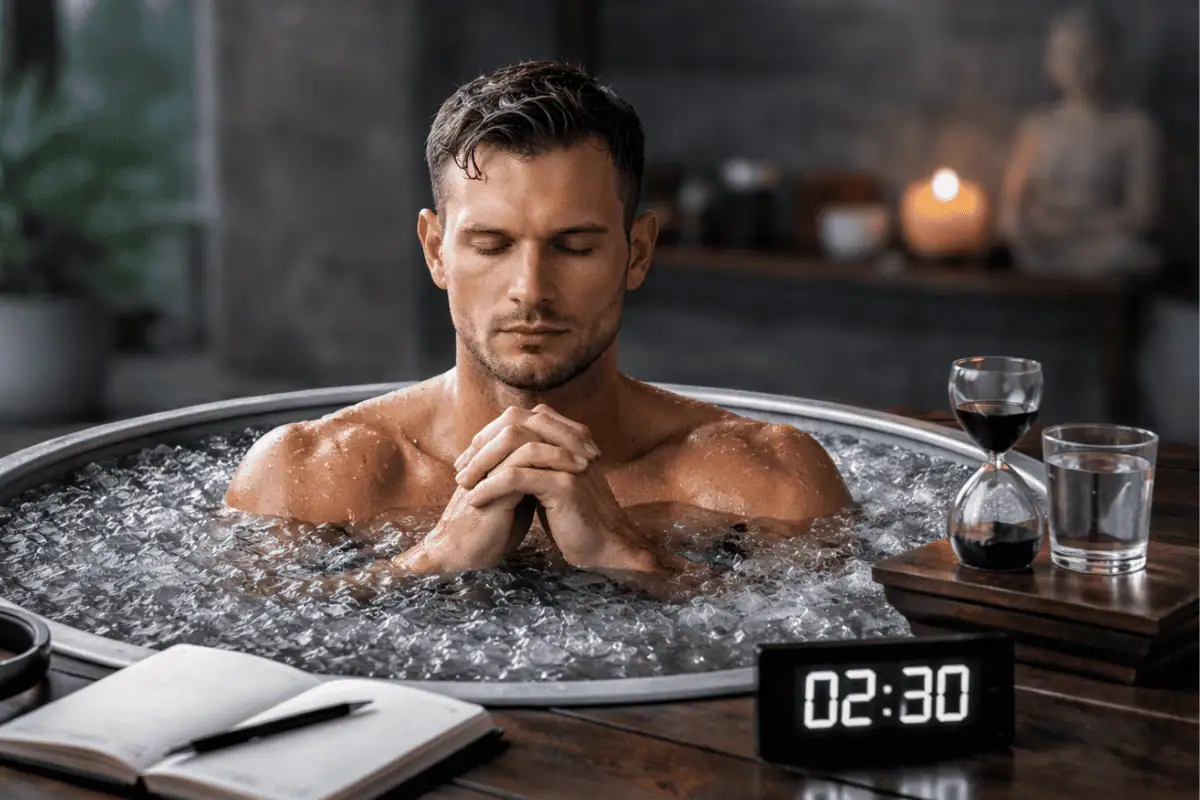
Many users report improved mental clarity and emotional steadiness following consistent cold plunge routines. These effects are likely mediated by neurotransmitter release rather than cortisol suppression alone.
This aligns with broader discussions on cold plunge benefits, where mood stabilization is frequently observed.
Psychological resilience in this context refers to improved tolerance of internal stress signals rather than elimination of stress. Cold exposure may support familiarity with transient discomfort, which can reduce avoidance-based stress amplification.
From a conservative perspective, these effects are best interpreted as supportive rather than transformative, varying widely between individuals.
Another conservative mechanism is improved interoceptive awareness—the ability to notice internal signals (breathing rate, tension, heart rate changes) without immediately escalating into worry or panic. Cold immersion can make these signals more noticeable, which may create opportunities to practice calm response patterns.
In stress management terms, the most reliable psychological benefit is often the building of a repeatable routine that reinforces control and consistency, rather than any guaranteed mood outcome from a single session.
Acute Stress Is Not the Same as Chronic Stress
Short-term physiological stress—such as cold exposure—can differ dramatically from chronic psychological stress.
In controlled settings, acute stress may promote adaptation rather than harm, similar to exercise-induced stress responses.
Who Might Benefit from Cold Plunge for Stress Relief?

Cold plunge for stress relief may be most appropriate for:
- Individuals with high cognitive load or mental fatigue
- People seeking non-pharmacological stress tools
- Those already practicing breathwork or mindfulness
Consistency and accessibility may influence outcomes as much as intensity. Stress-focused routines tend to be more sustainable when the setup supports regular, low-friction use.
Individuals who approach cold plunge as a gradual practice rather than a performance challenge may be more likely to experience supportive stress-regulation effects.
It may be less appropriate for individuals who consistently experience panic symptoms with cold exposure or who find that immersion reliably increases agitation for hours afterward. In those cases, the intervention may not match the goal even if it is “effective” as a stimulus.
A conservative decision rule is to evaluate the 30–120 minute window after a session. If the most common outcome is steadier breathing, calmer alertness, and improved composure, the dose may be aligned with stress relief. If the most common outcome is persistent activation or disrupted sleep, the dose or timing may need adjustment.
Because individual responses vary, many people benefit from starting with shorter exposures and modest temperatures, then only increasing intensity if the recovery response remains stable and predictable.
Stress Relief Does Not Override Safety

Cold plunge is not appropriate for everyone. Individuals with cardiovascular conditions, panic disorders, or uncontrolled hypertension should approach cautiously.
Refer to the Mayo Clinic for general guidance on cold exposure and cardiovascular stress.
How Cold Plunge Fits into a Stress-Reduction Routine

Cold plunge works best as part of a broader stress management framework:
- Consistent sleep routines
- Breathing or meditation practices
- Appropriate cold duration and frequency
Choosing a Cold Plunge Setup for Stress Use
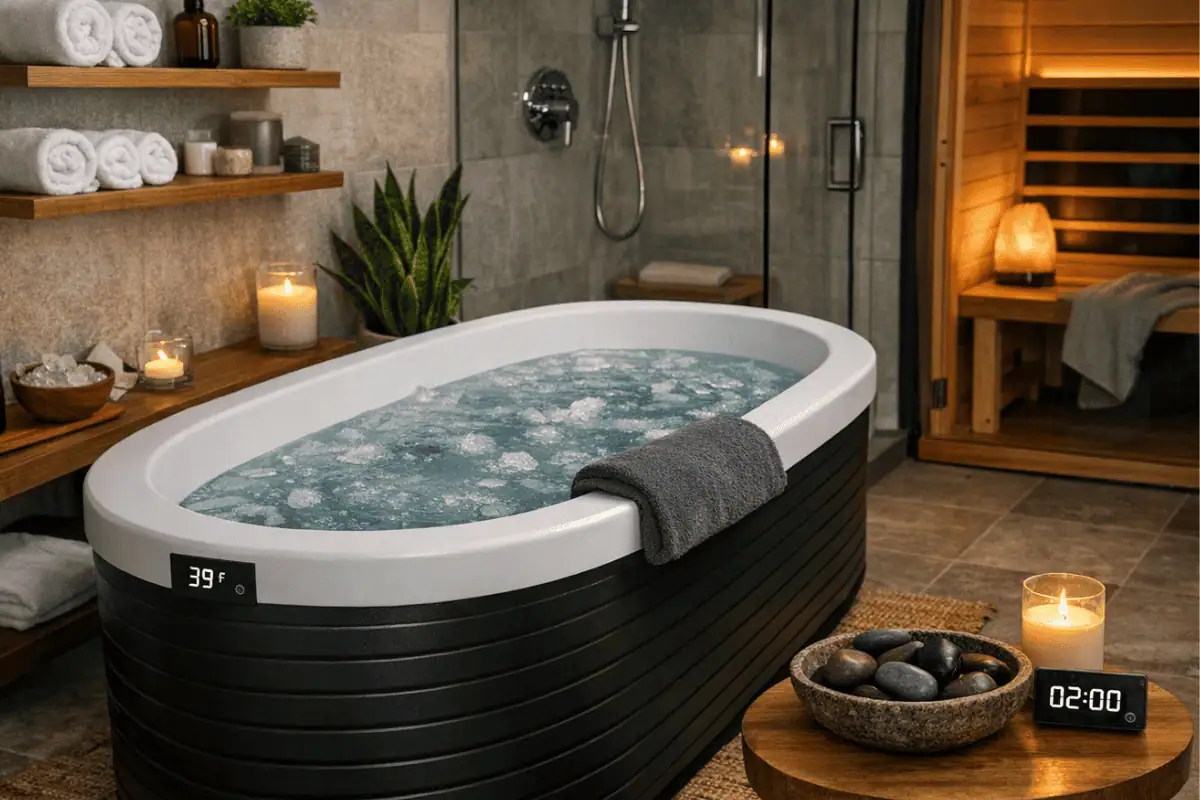
For those exploring structured cold plunge systems, reviewing the Best Cold Plunge Tubs Buyer’s Guide can help align equipment choice with stress-focused goals.
Can Cold Plunge Help with Stress?
Cold plunge therapy does not eliminate stress, nor does it directly suppress cortisol on demand. Instead, it may help retrain how the nervous system responds to stress through repeated, controlled exposure.
For those seeking a conservative, non-pharmaceutical tool to build stress resilience, cold plunge may serve as a supportive practice when used safely and intentionally.
Individual responses vary, and outcomes are most likely influenced by consistency, recovery, and overall stress context.
Explore Your Options
Learn how different cold plunge systems compare and which setups fit long-term wellness goals. View the Buyer’s Guide →
