Cold Plunge Duration Guide: How Long to Stay In, Safe Time Limits, and What Changes With Experience

Cold plunge duration is one of the most common—and most misunderstood—variables in cold water immersion. Many people assume that longer exposure automatically means better results. In reality, duration works together with temperature, experience level, and recovery goals to determine both benefit and risk.
This guide explains how long to stay in a cold plunge at different stages, what changes as you adapt, and where safety limits exist. The goal is conservative clarity—not endurance challenges or exaggerated claims.
Why Cold Plunge Duration Matters

Duration determines how much physiological stress the body experiences during cold exposure. Short immersions primarily trigger acute nervous system responses, while longer exposures extend cardiovascular and metabolic demands.
Unlike temperature—which defines intensity—duration controls how long those systems are challenged. Staying in too briefly may limit adaptation. Staying in too long increases risk without adding meaningful benefit.
- Short duration emphasizes alertness and nervous system activation.
- Moderate duration supports adaptation and recovery signaling.
- Excessive duration raises safety concerns without proportional gains.
One reason duration matters so much is the “cold shock” phase that can occur right at entry: rapid breathing changes, a spike in heart rate, and a strong sympathetic (“fight-or-flight”) response. In practical terms, the first 30–60 seconds is often where beginners feel the biggest intensity jump, even if the water isn’t extremely cold.
Duration also affects how far the cold stimulus progresses from a surface-level sensation to a deeper whole-body load. Early on, skin cooling and vasoconstriction dominate. As exposure continues, the body works harder to maintain heat, which is why longer sessions increase the chance of pronounced shivering or numbness in hands and feet.
A conservative framing is: you want enough time to get a meaningful stimulus, but not so much time that the session becomes a cold-injury or hypothermia risk. The Cleveland Clinic specifically recommends keeping cold plunges quick and avoiding long exposures, commonly suggesting a conservative cap rather than endurance-style sessions. (Cleveland Clinic: what to know about cold plunges)
Typical Cold Plunge Duration Ranges
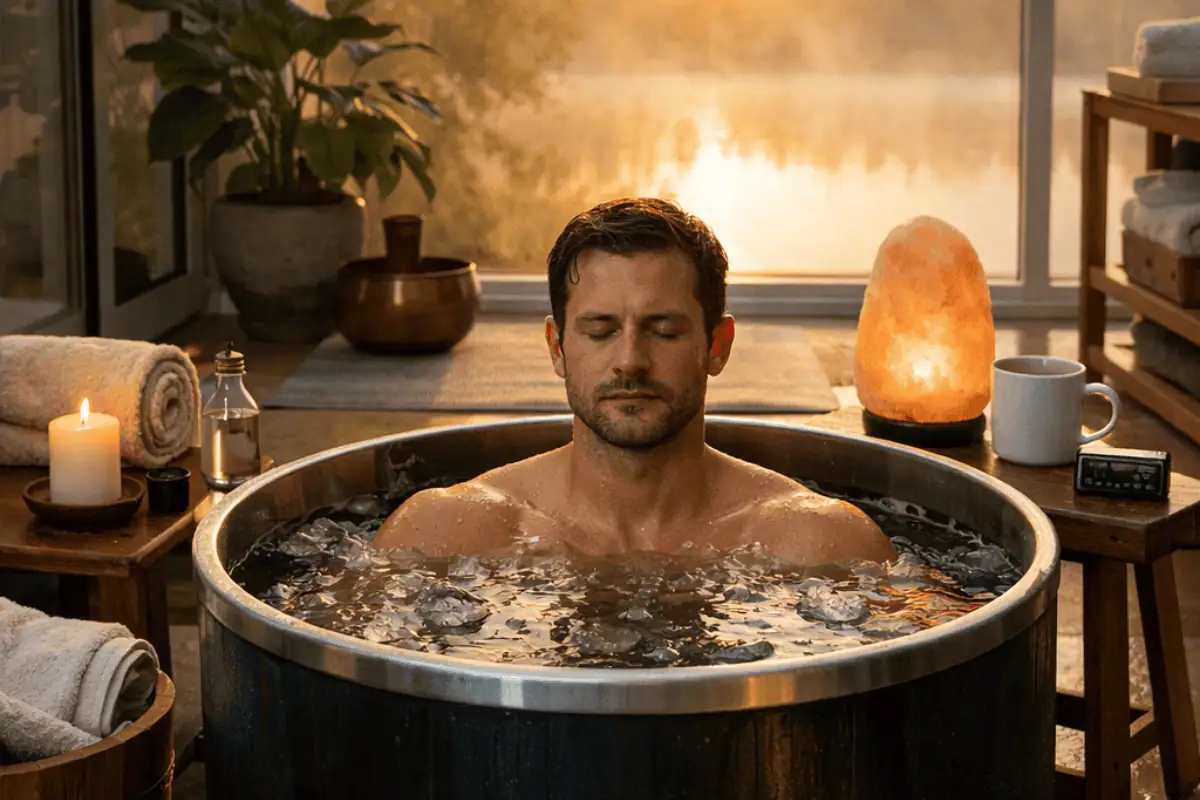
Most evidence-based protocols fall within a relatively narrow window. Across clinical research and conservative practice guidelines, cold water immersion durations typically range from 30 seconds to 5 minutes.
General reference ranges:
- 30–60 seconds: Entry phase, breathing control, acute alertness
- 1–3 minutes: Common adaptation range for most users
- 3–5 minutes: Upper limit for experienced individuals
Beyond five minutes, benefits plateau while risk increases—especially in colder water.
A useful way to apply these ranges is to treat them like a decision framework rather than a challenge:
- If your goal is “routine adherence” (building consistency), the best duration is the one you can repeat safely several times per week without dread or excessive fatigue.
- If your goal is “recovery support”, many conservative protocols sit in the 1–3 minute band rather than longer exposures.
- If your goal is “cold tolerance”, you still progress in small increments; extending duration should be slow and deliberate, not dramatic.
The reason the common upper limit is conservative is that cold-water exposure can shift from “stimulus” to “cold injury risk” faster than people expect—especially if the water is very cold, if the session includes motion that increases convective heat loss, or if hands and feet are submerged for long periods.
If you want a hard, easy-to-remember safety heuristic, Cleveland Clinic guidance commonly emphasizes keeping it quick and not exceeding a conservative maximum time. (Cleveland Clinic guidance on safe cold plunge duration)
Cold Plunge Duration for Beginners

For beginners, duration should be intentionally short. Early exposures are about learning to regulate breathing and safely tolerate the cold—not pushing limits.
A conservative beginner progression:
- Start with 30–60 seconds
- Focus on controlled nasal breathing
- Exit the water once breathing stabilizes
Beginners benefit most from consistency rather than longer sessions. This approach reduces risk while allowing gradual nervous system adaptation.
Beginner decision logic (simple and conservative):
- If you can’t control your breathing within ~30 seconds, your session is already “long enough” for that day. Exit calmly and try again another day.
- If breathing stabilizes but shivering ramps quickly, treat that as feedback to keep duration shorter at that temperature.
- If you feel lightheaded, confused, or unsteady, end the session immediately and do a calm, gradual warm-up.
It also helps to remove avoidable variables. Beginners often do better when they:
- Use a timer (so you don’t “negotiate” with yourself in the water)
- Enter slowly (especially if you’re new to full-body immersion)
- Keep the first sessions “repeatable” rather than extreme
Finally, be familiar with warning signs associated with excessive cold exposure. General hypothermia warning signs include shivering, confusion, clumsiness, and slurred speech—symptoms that matter in any cold-water context because water can cool the body more quickly than many people realize. (Mayo Clinic: hypothermia symptoms and causes; NIH News in Health: hazards of hypothermia)
How Experience Changes Cold Plunge Duration

With repeated exposure, the body adapts. The initial gasp reflex diminishes, heart rate stabilizes faster, and perceived discomfort decreases. These changes allow for modest increases in duration—but not unlimited ones.
Experienced users often find their effective range settles around 2–4 minutes. Extending beyond that point rarely adds measurable benefit.
Adaptation reflects improved tolerance—not immunity to cold stress. The physiological load still exists.
A practical way to think about “experience” is that you gain better control, not magical protection. You may feel calmer and more capable in the water, but your tissues still cool, and the risk of numbness and coordination loss can still rise if duration creeps up too far.
For many people, the biggest change with experience is that the session becomes more “stable”:
- Breathing becomes slower and more controlled sooner
- Perceived panic decreases
- The urge to immediately escape the water fades
That’s useful—but it also creates a subtle risk: tolerance can hide the early signals to exit. This is why experienced users often keep a consistent cap (for example, 3 minutes) and only adjust one variable at a time (either temperature or duration, not both).
Cold Plunge Duration and Water Temperature

Duration cannot be separated from temperature. Colder water intensifies physiological stress and reduces safe exposure time.
- 50–59°F (10–15°C): Often tolerated for 2–4 minutes
- 40–49°F (4–9°C): Usually limited to 1–3 minutes
- Below 40°F: Requires extreme caution and shorter durations
Longer duration does not compensate for colder water. Adjust time downward as temperature decreases.
Two factors commonly make “the same temperature” feel very different:
- Water movement: Circulating water (or any motion that increases water flow across skin) can increase heat loss and make a given temperature feel more intense.
- Surface area submerged: A shoulder-deep plunge is different from legs-only immersion; more submerged skin typically increases total cold load.
If you’re trying to dial in your personal duration, it helps to standardize the conditions (same depth, similar water movement, similar time of day) so you’re adjusting based on the variable you actually care about.
For safety context, NIH and Mayo Clinic resources on hypothermia highlight that clumsiness, confusion, slurred speech, and drowsiness are meaningful warning signs of excessive cold exposure—relevant because cold water can accelerate heat loss compared with cold air. (NIH: hazards of hypothermia; Mayo Clinic: hypothermia symptoms)
Recovery, Performance, and Duration

In athletic and recovery contexts, duration influences how cold exposure interacts with muscle adaptation and inflammation signaling.
Research suggests that shorter, controlled exposures may support recovery without blunting training adaptations, whereas prolonged cold immersion may interfere with muscle growth when used immediately after strength training.
This is why many protocols favor 1–3 minutes rather than extended sessions.
A conservative takeaway is to match duration to your primary training goal:
- Strength/hypertrophy emphasis: Consider avoiding longer cold immersion immediately after lifting, especially if your goal is muscle growth.
- Performance density (frequent training): Short, controlled sessions may be used more strategically when recovery between sessions is the priority.
- General wellness/recovery feel: Staying in the moderate range (often 1–3 minutes) is usually easier to repeat safely.
For example, a well-cited study in PubMed Central reported that post-exercise cold water immersion attenuated long-term gains in muscle mass and strength in a resistance training context—one reason many strength-focused athletes keep cold exposure conservative and strategic. (PubMed Central: post-exercise cold water immersion and muscle adaptation)
Signs You’ve Stayed In Too Long

Cold tolerance can mask risk. Knowing when to exit is critical.
- Uncontrollable shivering
- Numbness beyond mild tingling
- Dizziness or confusion
- Loss of coordination
These signs indicate excessive exposure. Ending the session early is a safety decision—not a failure.
To make this more concrete: if you notice your hands becoming clumsy (difficulty manipulating a towel, phone, or zipper) or your speech becoming less clear, treat that as a high-priority signal to end the session and warm gradually. NIH descriptions of hypothermia hazards specifically include becoming clumsy or confused as warning signs—useful markers because they’re easier to notice than “internal” measurements. (NIH: signs of hypothermia hazards)
How Often Duration Should Increase

Progression should be slow and intentional. Increasing duration every session is unnecessary.
A conservative approach:
- Hold a duration steady for 1–2 weeks
- Increase by 15–30 seconds only if recovery feels stable
- Avoid stacking longer duration with colder temperatures simultaneously
To keep progression grounded in reality, track a few “ownership variables” that matter more than bravado:
- Entry quality: Did your breathing stabilize quickly, or did you fight the water the entire time?
- Recovery quality: Did you warm back up normally within a reasonable time, or did you shiver hard for an extended period?
- Sleep and appetite: If cold exposure is pushing you into a wired state late in the day, duration may need to come down.
- Consistency: A repeatable 90–120 second session often beats sporadic “hero” sessions.
A simple rule that keeps things conservative: increase duration only when your current duration feels boring (breathing controlled, no lingering heavy shivering, no next-day “drag”), and even then, increase by a small increment.
Cold Plunge Duration Myths
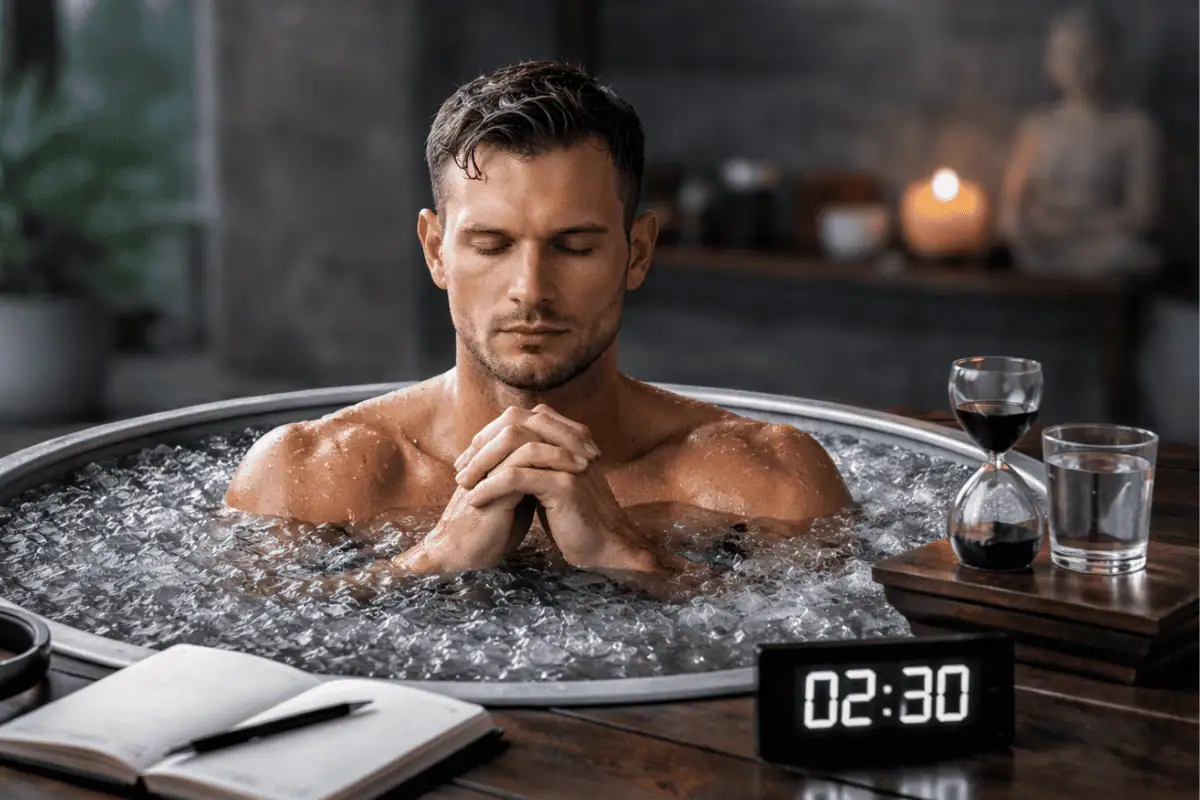
Several myths persist around cold plunge duration:
- “Longer is always better” — Not supported by evidence
- “You must reach a specific time” — Individual responses vary
- “Endurance equals adaptation” — Tolerance is not the same as benefit
Consistency and safety matter more than arbitrary time targets.
Another common myth is that discomfort is the only metric that matters. In reality, the most important metrics are often functional and safety-related: coordination, cognitive clarity, breathing control, and how you recover after the session. This is also why “more minutes” is not a reliable proxy for “more benefit.”
Safety Considerations and Contraindications

Duration limits are especially important for individuals with cardiovascular conditions, blood pressure concerns, or a history of fainting.
If you have medical conditions or take medications that affect circulation or heart rate, consult a healthcare professional before experimenting with longer cold exposure.
For a broader overview of precautions, see our Cold Plunge Benefits page and our Contact page for questions.
From a conservative safety standpoint, it’s also wise to avoid combining longer cold exposure with risk amplifiers like alcohol, extreme fatigue, or being alone without someone nearby—especially if you are new to full-body immersion.
If you want a clear list of general warning signs to respect (which overlap with cold-water safety), Mayo Clinic resources on hypothermia list symptoms like shivering, confusion, clumsiness, and slurred speech as red flags. (Mayo Clinic: hypothermia symptoms)
When Equipment and Setup Affect Duration
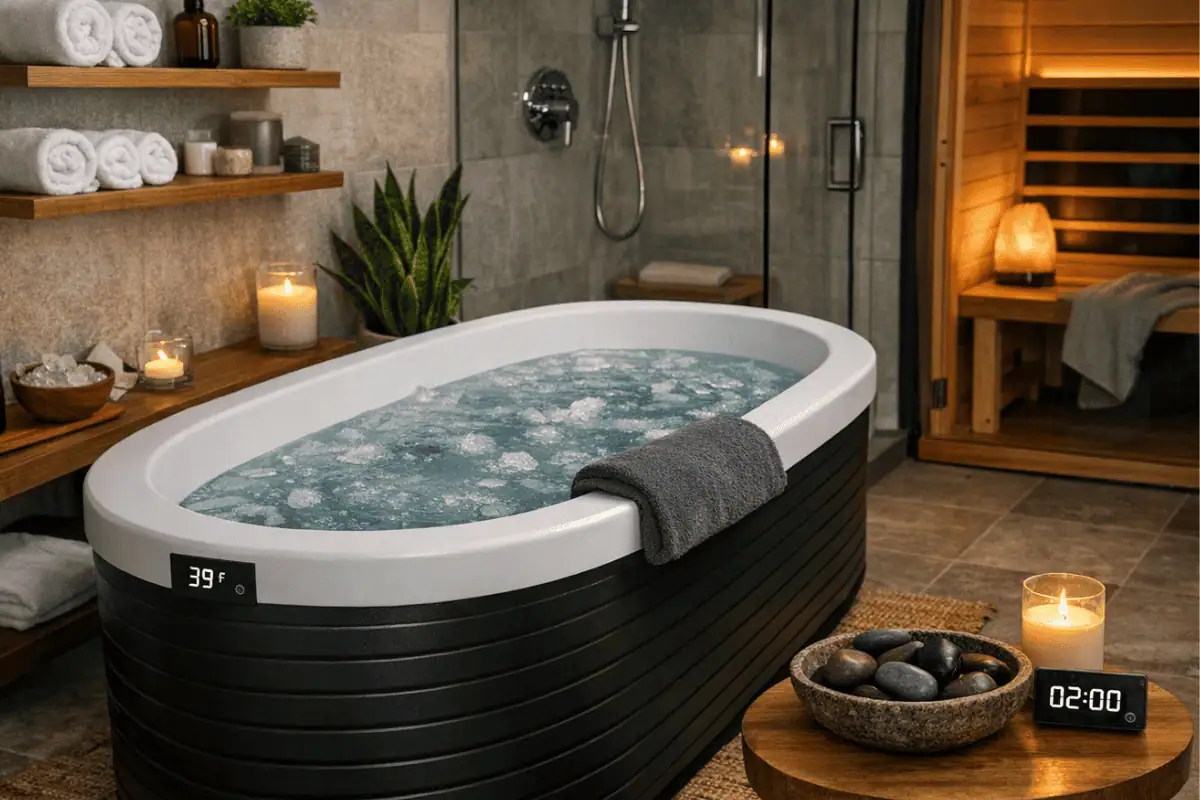
Controlled cold plunge systems allow more precise temperature management, which makes duration planning easier and safer compared to improvised setups.
If you’re exploring different systems and setups, our Best Cold Plunge Tubs Buyer’s Guide explains how temperature control, insulation, and circulation affect exposure consistency.
Explore Your Options
Learn how different cold plunge systems influence temperature stability and safe session length. See the Buyer’s Guide →
Setup details can also influence how accurately you can follow a duration plan:
- Thermometer accuracy: If you don’t know the real temperature, duration decisions become guesswork.
- Stable water temperature: A plunge that warms quickly (small volume, poor insulation) can make “time in water” less consistent session-to-session.
- Safe exit: Slips and falls are an under-discussed risk; having a stable step or handhold matters, especially when hands feel cold and less coordinated.
The more consistent your setup, the easier it is to keep duration conservative and repeatable.
Conclusion: Finding the Right Cold Plunge Duration
Cold plunge duration is not about chasing extremes. Most people benefit from short, consistent exposures that align with their experience level, temperature, and recovery goals.
For beginners, 30–60 seconds is enough. For experienced users, 1–4 minutes typically captures most benefits without unnecessary risk. Beyond that, returns diminish while safety concerns rise.
If you’re building a long-term cold plunge routine, prioritize consistency, conservative progression, and proper setup. For deeper comparisons and system guidance, visit our Buyer’s Guide or browse the Plunge Sage Blog.
If you ever feel uncertain about safety signals, choose the conservative option: shorter duration, warmer water, and gradual progression.
