
Cold Plunge and the Nervous System: Sympathetic Shock vs Parasympathetic Recovery
Published: September 19, 2025
Last updated: January 24, 2026

Cold plunge therapy creates one of the most immediate and noticeable nervous system responses of any wellness practice. The moment cold water contacts the skin, the body reacts automatically—often before conscious control is possible. Understanding how the cold plunge nervous system response works helps explain why the experience feels intense at first, why breathing changes, and why calm often follows after the initial shock.
This guide breaks down how cold exposure activates the sympathetic nervous system, how recovery shifts the body toward parasympathetic dominance, and what happens over time as adaptation occurs.
The Autonomic Nervous System and Cold Exposure

The autonomic nervous system regulates involuntary bodily functions such as heart rate, breathing, blood pressure, and digestion. It operates continuously in the background and is divided into two primary branches: the sympathetic and parasympathetic nervous systems.
Cold plunge therapy directly stimulates this system because temperature receptors in the skin rapidly signal the brain that the environment has changed. This sensory input bypasses conscious thought and triggers automatic survival responses.
From a physiological perspective, the autonomic nervous system is designed to respond quickly to environmental threats and then recalibrate once safety is restored. Cold exposure provides a clear, time-limited stimulus that activates this loop in a predictable way. Because the stimulus is physical rather than psychological, the nervous system response tends to follow consistent patterns across individuals, particularly during early exposure.
This predictability is what allows cold plunge therapy to be studied and discussed in mechanistic terms. While individual tolerance varies, the sequence of activation and recovery is largely governed by well-established neural pathways rather than subjective interpretation.
In practical terms, this means that most people will experience similar stages when entering cold water, even if the intensity differs. The autonomic nervous system does not require training to respond; it reacts reflexively, based on temperature and sensory input alone.
Over time, repeated exposure may refine how efficiently these pathways operate. The underlying structure of the response remains the same, but the speed and coordination of signaling can improve with familiarity.
Another important feature of the autonomic nervous system is that it operates on gradients rather than binary states. Sympathetic and parasympathetic activity are not mutually exclusive switches; instead, both systems are active to varying degrees at all times. Cold exposure temporarily shifts the balance toward sympathetic dominance without permanently suppressing parasympathetic function.
This graded control helps explain why cold plunge therapy can feel intense without being inherently destabilizing when exposure is brief and controlled. The nervous system is adjusting relative emphasis between activation and recovery pathways, not entering a pathological state.
Sympathetic Shock: The Initial Cold Plunge Response

Upon entering cold water, the sympathetic nervous system activates almost instantly. This response is sometimes referred to as “cold shock” and includes rapid breathing, increased heart rate, and heightened alertness.
According to research summarized by the National Institutes of Health, cold exposure stimulates peripheral cold receptors that trigger a cascade of stress-related signaling pathways. This reaction is protective, not harmful, when exposure is controlled and brief.
This sympathetic surge is not a sign that the body is failing to cope. Rather, it reflects an intact and responsive nervous system doing exactly what it is designed to do under sudden environmental stress. The rapid onset of breathing changes and cardiovascular activation helps maintain oxygen delivery and blood pressure during the initial temperature drop.
Importantly, this phase is transient. As long as exposure remains within reasonable limits, sympathetic dominance begins to ease as the body recognizes that the stressor is not escalating. This sets the stage for the recovery response that follows.
For many beginners, this initial phase feels overwhelming because it arrives abruptly and demands immediate physiological adjustment. With repetition, the nervous system becomes more efficient at moving through this stage without eliminating it entirely.
Understanding that this response is expected—and temporary—can help contextualize early discomfort without framing it as a warning sign.
Breathing and Heart Rate During Cold Immersion

Rapid breathing is one of the most noticeable effects of sympathetic activation. This reflexive response increases oxygen intake and prepares the body for action. Heart rate may rise initially, although trained individuals often experience quicker stabilization.
The Cleveland Clinic notes that controlled breathing during cold exposure can help moderate this response, allowing the nervous system to regain balance more quickly.
From a nervous system standpoint, breathing acts as one of the few voluntary levers that can influence autonomic activity in real time. Slowing the breath, particularly through extended exhales, sends feedback signals that support parasympathetic engagement even while cold exposure continues.
Heart rate responses also tend to normalize more rapidly as familiarity increases. This does not eliminate sympathetic activation but reflects improved coordination between respiratory control and cardiovascular regulation during immersion.
This interaction between breathing and heart rate illustrates how autonomic responses are integrated rather than isolated. Changes in one system influence the other, shaping the overall experience of immersion.
As coordination improves, the nervous system may transition more smoothly from activation toward recovery without abrupt swings in physiological state.
Individual breathing patterns can significantly influence how long sympathetic dominance persists during immersion. Shallow, rapid breathing tends to reinforce activation signals, while slower, more deliberate breathing patterns support earlier engagement of recovery pathways.
Although breathing does not eliminate the initial shock response, it can affect how smoothly the nervous system transitions toward stability. This interaction highlights why respiratory control is often discussed in cold exposure research without implying any specific technique or guarantee.
Vasoconstriction and Sensory Signaling

Cold water causes vasoconstriction, narrowing blood vessels near the skin to preserve core temperature. This process is tightly regulated by the nervous system and contributes to the intense sensation many people feel during early immersion.
As circulation shifts inward, nerve endings relay continuous feedback to the brain, reinforcing alertness and awareness during the plunge.
This heightened sensory input plays a key role in how cold exposure is perceived. Cold receptors fire rapidly, sending high-volume signals that dominate sensory processing. Over time, repeated exposure appears to reduce the perceived intensity of these signals, even though the underlying physiological response remains active.
The balance between vasoconstriction during immersion and vasodilation afterward is also part of the recovery cycle. Once exposure ends, blood flow gradually returns to the skin, supporting warmth and tissue reoxygenation.
This rebound phase is closely tied to parasympathetic activity, reinforcing the transition from alertness toward relaxation after leaving the water.
Parasympathetic Activation After the Shock
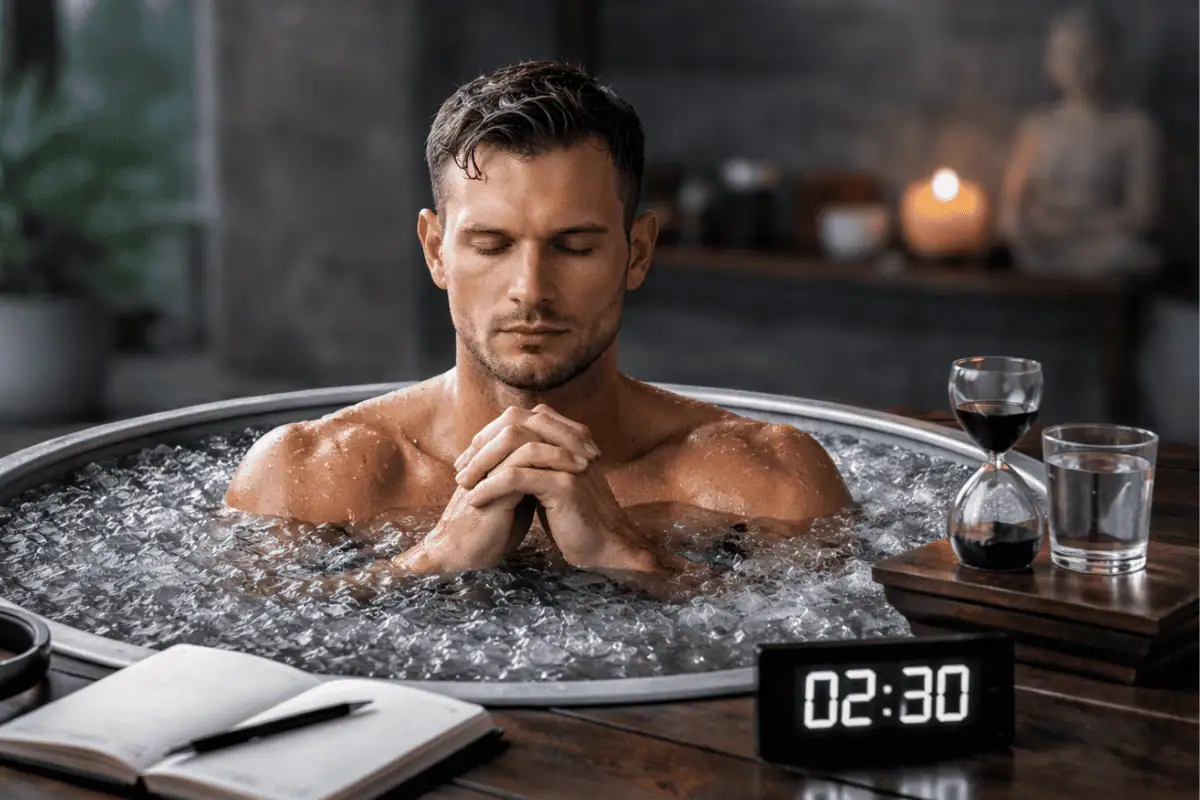
Once breathing slows and the body stabilizes, parasympathetic activity begins to increase. This phase is associated with calm, clarity, and a sense of relaxation that often follows cold exposure.
Studies referenced on PubMed suggest that repeated cold exposure may enhance vagal tone, a marker of parasympathetic nervous system strength.
This shift does not mean the sympathetic system fully disengages. Instead, the nervous system moves toward a more balanced state, where recovery pathways become dominant while alertness remains intact. Many users describe this phase as mentally steady rather than sedated.
The speed at which this transition occurs often improves with consistency. Shorter recovery times may reflect improved autonomic flexibility rather than reduced exposure intensity.
In this context, recovery is an active physiological process rather than a passive collapse. The nervous system is recalibrating in response to a completed stress cycle.
Parasympathetic engagement following cold exposure is often accompanied by subjective sensations of warmth, slowed breathing, and mental quiet. These sensations reflect downstream physiological changes rather than direct effects of cold itself.
The consistency of this recovery pattern is one reason cold exposure is frequently studied as a model for controlled stress adaptation rather than as a relaxation technique.
Nervous System Adaptation With Repeated Cold Plunges

With regular practice, the nervous system adapts. Initial shock becomes less intense, breathing control improves, and recovery occurs more quickly. This adaptation reflects improved autonomic flexibility rather than reduced stimulus.
This is why beginners often experience intense reactions initially, while experienced users report smoother transitions between activation and calm.
Adaptation does not imply that the nervous system becomes numb to cold. Instead, it suggests that neural signaling becomes more efficient and coordinated. The same stimulus produces a more controlled response, reducing perceived distress without eliminating physiological engagement.
This distinction is important when evaluating long-term use. Effective adaptation preserves responsiveness while improving regulation.
Over time, these changes may generalize beyond cold exposure, supporting more efficient stress recovery in everyday environments.
Cold Plunge and Stress Resilience
Cold plunge therapy is often discussed in the context of stress management. By repeatedly exposing the nervous system to a controlled stressor, the body may become better at regulating responses to everyday stress.
The Mayo Clinic emphasizes that stress resilience is closely tied to autonomic balance, making nervous system regulation a key factor in overall well-being.
Safety Considerations for Nervous System Health
Individuals with cardiovascular conditions, uncontrolled hypertension, or neurological disorders should approach cold plunge therapy cautiously. Sudden sympathetic activation may pose risks for certain populations.
Always prioritize gradual exposure, short durations, and proper supervision when beginning cold plunge routines.
From a nervous system perspective, safety is closely linked to predictability and recovery. Extremely long exposures, aggressive temperature drops, or inconsistent routines may increase strain without providing additional benefit.
Establishing conservative boundaries around duration and frequency helps ensure that activation is consistently followed by adequate recovery.
Paying attention to recovery quality—not just tolerance during immersion—can help guide safer long-term practice.
From a long-term perspective, conservative use emphasizes sustainability rather than tolerance. The goal is not to suppress discomfort indefinitely but to ensure that each exposure is followed by complete physiological recovery.
If recovery becomes progressively slower or symptoms persist beyond the post-immersion period, this may indicate that exposure parameters should be reassessed.
Cold Exposure Compared to Chronic Stress
Unlike chronic psychological stress, cold plunge exposure is brief, predictable, and followed by recovery. This distinction is important, as prolonged sympathetic activation without recovery can negatively affect health.
Cold plunge therapy emphasizes the full cycle: activation followed by restoration.
Integrating Nervous System Awareness Into Your Routine
Understanding nervous system responses can help guide duration, temperature, and frequency decisions. For a broader overview, see our cold plunge benefits guide.
Those exploring equipment options can also reference the Best Cold Plunge Tubs Buyer’s Guide.
Signs You May Need to Adjust Your Approach
Persistent dizziness, irregular heart rhythms, or prolonged discomfort may indicate excessive nervous system strain. Listening to these signals is essential.
If symptoms persist, reducing frequency or seeking medical guidance is recommended.
Conclusion: Balancing Activation and Recovery
Cold plunge therapy creates a powerful yet predictable nervous system response. Initial sympathetic activation gives way to parasympathetic recovery, forming the foundation of its perceived benefits.
Understanding this balance allows users to approach cold exposure with clarity, safety, and realistic expectations. For next steps, explore the Plunge Sage blog or reach out via our contact page.
